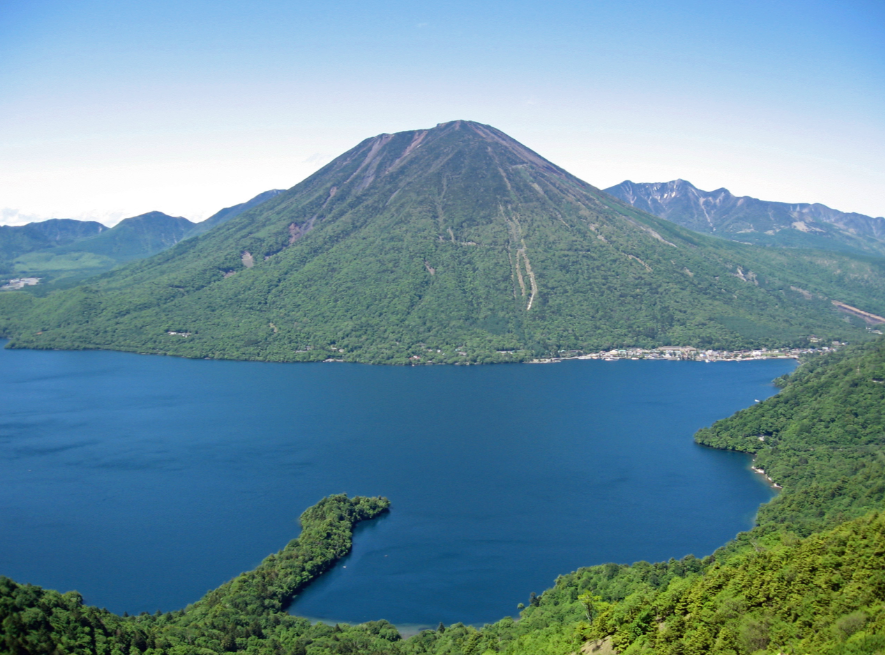
Overlooking Lake Chuzenji in Nikko National Park is the revered volcanic peak, 2486m Mount Nantai. It is a sacred mountain in the Shinto religion and has been climbed by pilgrims for over a thousand years. Today, a hike on Mount Nantai is taken by religious pilgrims as well as by recreational hikers. They are attracted by steep trails and a spectacular view of the surrounding lakes and forests.
🥾 Mount Nantai Hike: Quick Summary
Everything from the guide below, condensed — plus a few things most guides skip.
📊 Hike Summary
Distance
~10 km round trip (5 km one way)
Elevation gain
~1,200 m (summit 2,486 m)
Time
~6.5–7 hrs total: 3.5–4 hrs up, 2.5–3 hrs down
Difficulty
Hard🚌 Getting There
Tobu bus from JR Nikko or Tobu-Nikko Station (bound for Yumoto Onsen) → Futarasanjinja Chugushi stop, about 55 min, ~¥1,250 one-way. The trailhead is at the shrine, right by the bus stop.
- Buses run roughly 3 times per hour during the day; the ride is covered by the Nikko All Area Pass.
- From Tokyo, allow about 2 hours to Nikko (Tobu limited express from Asakusa, or JR via Utsunomiya), plus the bus ride.
- A ¥1,000 entry fee (free up to junior high school age) is paid at Futarasan Shrine Chugushi before you start; you also fill in a climbing register there.
- The last return buses leave in the early evening — plan your descent around the timetable, not the other way around.
🧭 The Route, Stage by Stage
Shrine → Lower Slopes
The trail starts climbing almost immediately through forest, with rocky steps and switchbacks. Deceptively tough warm-up.
Middle Section
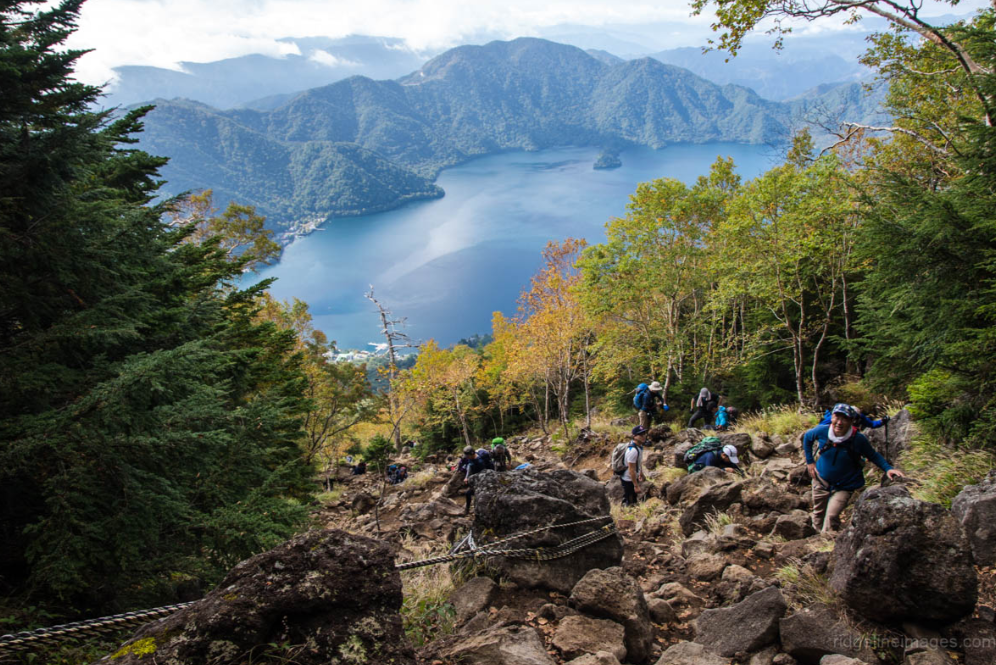
Relentless zigzags over roots and boulders, gaining most of the 1,200 m. Poles help on the way back down.
Above the Treeline → Summit
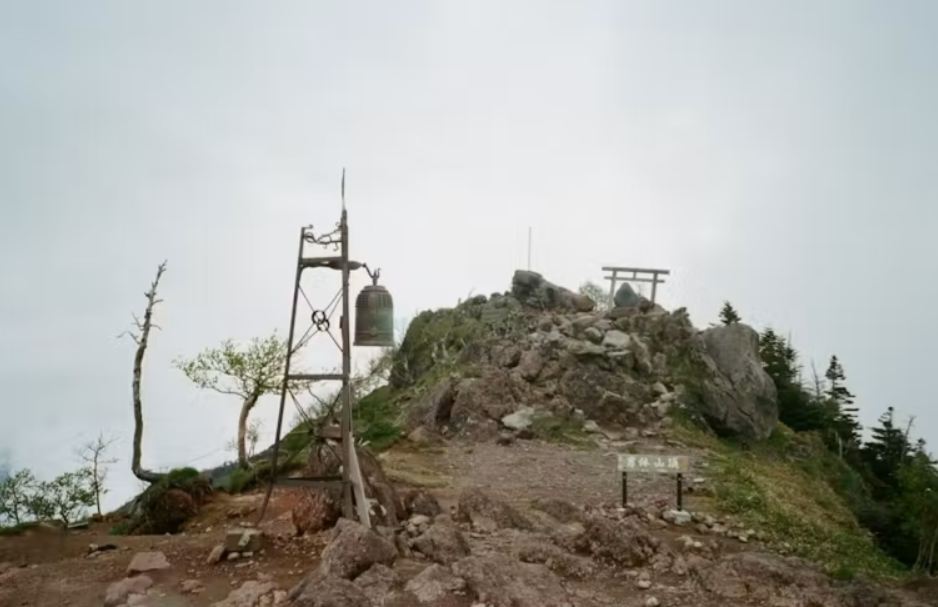
Rocky but more open, with Lake Chuzenji spreading out below. The summit holds a shrine and a giant sacred sword.
There is one official route — up and down the same trail from Futarasan Shrine. Because it’s out-and-back, you can turn around at any point and still get the views. There are no water sources or toilets on the mountain, and the trail effectively closes for descent in the late afternoon, so most hikers start between 7:00 and 9:00.
📅 When to Hike
🌤️ Weather Check
🎒 What to Pack
💡 Good to Know Before You Go
Elevation
0 m
Location
Nikko, Tochigi Prefecture
Belongs to
Nikko National ParkTable of Contents
A Mountain of Great Religious Value
Mount Nantai is associated with Futarasan Shrine, and locals consider it a sacred body (Kami-ito). The shrine manages the climbing gates; usually, it collects a small entry fee before allowing you to climb. This tradition makes a hike to Mount Nantai not only a physical but also a spiritual experience for many.
The official climbing season is also determined by the shrine. The gates are opened and closed on a regular annual basis.
What Time of Year is the Climbing Season?
There is a window during which a hike to Nantai will take place. It is best to be aware of this before embarking on a trip. Normally open from early May and closed by late October, the mountain follows the traditional calendar of the shrine. Climbing, for the most part, is forbidden outside of this time.
In late spring, there is new growth; you can find some snow near the peak, but temperatures are cooler. Warmer weather in the middle of the summer means that this is a popular time to visit. Many of the lower slopes are famed for their spectacular autumn colour, and for many hikers it's the best time to visit the mountain, provided they're brought down to cooler weather.
Step 1: Register at the Shrine Gate
All climbs start with an inscription at the torii gate close to the Chuzenjiko Onsen. A fee is paid here, and it is deemed to be a first step to any hike on Mount Nantai. Keep in mind that visitors are limited by the hours of the gate, and most climbs are expected to take place during a specific period of the day.
This registration is best done early in the morning, as there is a possibility of affecting the entire day's schedule if there are delays in this process.
Step 2: Select the Appropriate Approach
Most climbers make their way on the main path, which starts at the shrine gate on the north shore of Lake Chuzenji. This is a well-marked and maintained path and is the preferred route for a hike up Mount Nantai.
There is a secondary route on the other side of the mountain, but it's not as well-worn and is accessible only to those who have prior knowledge of the mountain terrain and are experienced in hiking.
Step 3: Prepare the Body
Not to be overlooked is the physical preparation required for this hike, as there is lots of steep climbing to be done. In the weeks before going on, it is recommended to engage in regular walking, stair training, or cycling. Also, it's important to strengthen the legs by specific exercises – there are some steep, sustained sections along the trail. A shorter hike should also be practised, as this will allow a better test of footwear and multi-layered clothing.
Step 4: Packing the Right Gear
For this climb, a well-packed kit is deemed essential. These are some of the more frequently suggested items:
- Sturdy, supportive hiking boots that are durable.
- A layering system, as there can be differences in temperature between elevations
- A waterproof jacket that is windproof as well.
- This is a good item to take both when going up and coming down a mountain, and trekking poles are great for that.
- Gloves are recommended for areas with chains or ropes.
- Adequate amount of water and energy-rich food (nutrients) snacks
- A First Aid Kit (basic)
- A head torch (just in case descent is going to be later than anticipated)
- It is best to bring cash to pay the registration fee at the shrine, as it is usually done in cash.
- Gloves come up twice along this path; a few places have fixed chains for help on the steepest of ground.
Step 5: Starting the Ascent
Lower slopes to the shrine are first crossed over forested slopes from the shrine gate. Here, a moderate but steady slope is common, with some shady pathways for shade. This section is generally considered a tamer approach towards the entrance, prior to the steep sections.
The trail gets quite steep and is found traversing over significant amounts of volcanic soil as the elevation rises. This section is a challenging one to walk with care, and may be taken slowly at a more measured pace. This is the middle section of a hike up Mount Nantai and is generally the most difficult hiking section due to the constant ascent.
Step 6: Navigate
Up higher, there are some fixed chains and ropes, which help hikers over challenging, rocky areas. Should be used with caution and should not be used when chains are in hand. Sharp volcanic rock is prevalent along this section, and thus gloves are particularly helpful.
This section of a Nantai hike requires all concentration, and it is recommended that this not be rushed. It will generally be a much safer course to take a long, slow time frame rather than rushing.
Step 7: Attain the Summit
At the summit of the mountain, a torii gate and a small shrine are found, signifying the holy nature of this mountain. One can enjoy sweeping views over Lake Chuzenji, the surrounding mountains of Nikko, and, on particularly clear days, even to the horizon.
The time at the top of the mountain is usually spent resting, taking photos, and meditating on the spiritual history of the mountain. However, it is recommended that it be planned with sufficient daylight to allow descent, as eventually the trip to Nantai can take longer on the way back than was thought.
Step 8: Descent is Under Control
Much of this mountain is extremely steep and rugged, so special care must be taken when descending the mountain. Chains that are found throughout the ascent are found here too, and a slow and controlled pace is highly recommended throughout. Use trekking poles, if necessary, to help alleviate fatigue in the knees.
Generally, it is recommended to start the hike down at an earlier time than the closing time of the shrine gate, because hikers have to complete the hike to a shrine of Mt. Nantai within the daily access time (usually from 09:00 to 18:00) given by the Futarasan Shrine.
Safety Precautions
Here are a few precautions to be taken while making this sacred ascent:
- Access to the shrine gate hours is time-limited and should be checked before travel.
- It is important to monitor the weather carefully, as there is potential for rapid change at this height.
- Due to the chained sections near the top, gloves are always to be carried.
- A uniform speed should be used, especially on loose volcanic soil.
- Make sure there's enough daylight scheduled, as descents can be longer than expected.
- It is important for hiking partners to stay close to each other, particularly in the more technical parts.
These measures are common practice among shrine officials and mountain guides and are deemed essential to finishing this climb safely and respectfully.
A Church with the Word Climb is Rooted in Devotion
The element of spirituality in a hike to Mount Nantai is one that sets it apart from numerous hikes in Japan. As pilgrims have done for centuries, all the steps here are taken along an historic track, and that fact helps make this an even more arduous hike.
This is a challenging climb that is rich in cultural significance and, for the astute and well-prepared hiker, a wonderful combination of physical effort and cultural enrichment, concluding with some of the best views in the entire Nikko region at the top. For a similar kind of blog, read more about Mount Ontake.
