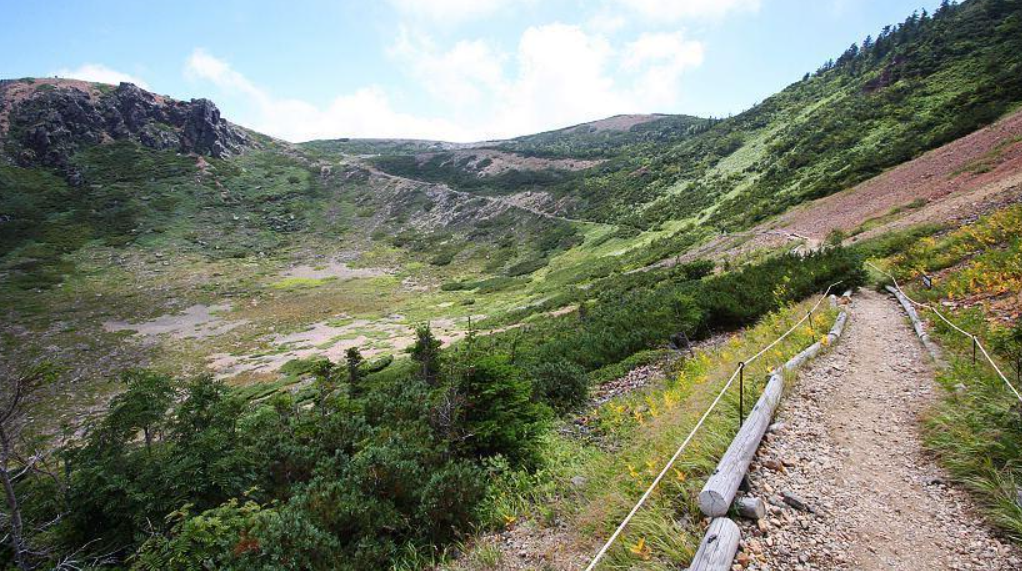
However, this remote peak is located in Gunma’s Oze National Park region, where Mount Shibutsu, at 2228m, is found within the National Park. This mountain is considered one of the best places to see wildflowers in Japan and is also popularly visited for the famous Ozegahara wetlands. Nature enthusiasts come to hike Mount Shibutsu each summer for its rare flowers in the alpine areas and panoramic views of the expansive marshland.
Table of Contents
The Mountain with flowers
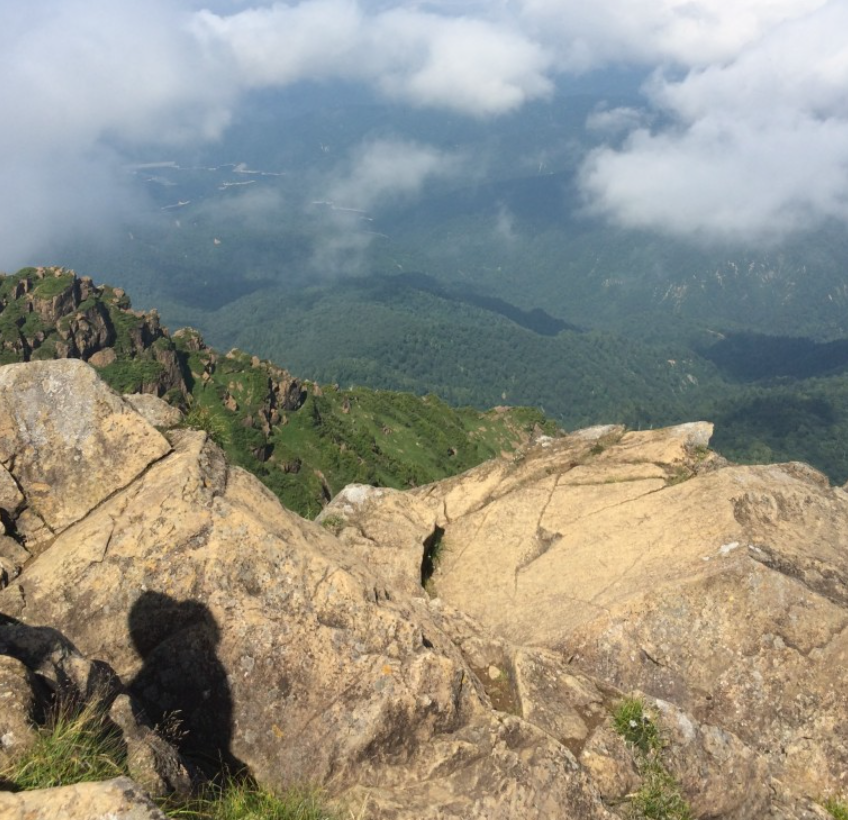
Mount Shibutsu is not of volcanic origin, as many volcanic peaks in Japan are. Most of its slopes are formed of serpentine rock, and this strange geology is believed to be responsible for the presence of rare plant species unique to this region. This is why, for many, a Mount Shibutsu hike is more of a botanical pilgrimage than a physical one.
Planning the Hike
Generally, a narrow climbing window is recommended. Trails are usually open in late June and close again in early October when snow is seen at higher elevations.
The rare alpine flowers blanket a great deal of the upper slopes during early July, when this is considered peak bloom. It’s warmer, calmer weather in August, but the flowers are fewer and far between compared to earlier in the year. September, on the other hand, is a time that has less activity on the trails and the first fall colours.
Step 1 – Comprehending Access Restrictions
During the flowering period, entry restrictions are enforced and should be taken into account before planning any trip. A designated entry system is employed, and at times reservations may be necessary via official channels. Existing regulations are strongly recommended to be consulted well in advance of attempting a Mount Shibutsu hike, as fines can be issued for unauthorised access during certain times of the year.
These rules are in place to preserve the rare vegetation and should always be observed, even on trails that look open and abandoned.
Step 2 – Choose a Route
There are generally two ways to get to the top. The Oshimizu Route is believed to be the more direct route and is also the preferred route for those with short time budgets. A certain level of fitness is required for this route, as there are steeper sections.
The Ozegahara wetlands are entered first on the way to the Junsainuma Route, however. This is the longer option, but the views of the marshland are enjoyed prior to the climb. It’s popular for people who want to go to the peak and enjoy a view of the wetland scenery.
If either of these options is selected, it is important to check the current trail status before embarking on a hike on a Shibutsu because seasonal closures may be in effect due to conservation efforts.
Step 3 – Prepare the Body
Don’t underestimate the importance of physical conditioning, as this is a moderately challenging climb. Walking, hiking, or cycling is recommended for several weeks prior to departure. Leg strength is also important and can be developed by a variety of exercises, including lunges and step-ups, as steep, root-covered sections can be found on most routes.
It is also recommended that a shorter hike, with boots and equipment, be done prior to the main hike to ensure that the boots and equipment work well. It’s important to gradually increase endurance, as a hike on Mount Shibutsu, it can require a whole day’s work.
Step 4 – Packing Up the Required Equipment
This is a remote climb where a well-planned kit is a must. The following items are suggested:
- Sturdy hiking boots with good grip.
- Reliable hiking boots.
- Multilayered clothing because of the changing temperatures throughout the elevation
- A rain jacket is a requirement, as it rains here a lot in the mountainous area.
- Trekking poles for steep and muddy areas.
- Wet or boggy sections: Gaiters are recommended.
- Biting insects are often found near wetlands, and insect repellent is needed.
- Adequate water and energy-rich snacks
- A First Aid Kit (a simple one)
- A map of the trail – signal is often lost in this remote area.
Emphasising insect repellent once again, because it is a common concern that is mentioned numerous times by previous hikers on the trails adjacent to the marsh.
Step 5 – Making the Ascent
Lower slopes are traversed first in most trailheads and are through the forest. Generally shaded and sloping, this area is considered a ‘warm-up ‘. The route is generally quite remote, and wildlife sounds are often noted.
With rising elevation, the forest thins out gradually, and alpine meadows start to emerge. It’s here that you can find the most colourful wildflowers in this area, especially in early July. The slower pace is often suggested here, as the rare buds are not likely to be accidentally stepped on.
Uphill, harder rock is found, and slow and careful footing is needed. The steep areas at the top require special attention, and trekking poles will be particularly helpful here. It is often said that this section of a Mount Shibutsu hike is the most strenuous, as a result of the elevation and the footing.
Step 6 – Reach the Summit
At the top, there are panoramic views out over the Ozegahara wetlands and across the mountain ranges. On very clear days, some peaks can be glimpsed in the distance leading to the horizon. It is an intangible feeling of isolation here, as very few people are seen as compared to more accessible mountains.
This is a very volatile region where it is recommended that time at the top should not be extended if clouds are observed to increase rapidly. When it is time to descend, usually photographs, rest, and rehydration are sufficient.
Step 7 – Going Down Slowly
The descent should be conducted at a controlled speed, especially on the steep portions of the descent near the top. Use of trekking poles is advised, and shorter steps are recommended in order to decrease knee strain.
It’s suggested that the same track be taken back down, unless a different one has been researched beforehand. There should always be enough daylight planned for, as a hike up and down Mount Shibutsu may take a full day, and a headlamp should always be taken as a precaution.
Step 8 – Respect the Wetlands
When travelling the Junsainuma Route, the Ozegahara wetlands will be crossed again on the way back. Boardwalks are offered here, and hikers should always stay on boardwalks. Entering the boardwalk, and especially exiting, is not recommended as it can cause damage to the fragile wetland vegetation, and it can take many years to recover.
Safety Measures
Several precautions are thought to be necessary for this out-of-the-way climb:
- Pre-arranged entry or reservations must be verified before travel, as needed.
- Care needs to be taken to review the weather forecast, as conditions can change rapidly.
- It is important to have a hike plan with somebody who is not participating in the hike.
- Protection from insects should always be carried, particularly in the vicinity of the wetlands.
- Do not leave boardwalks to prevent damage to sensitive vegetation.
- Consider the isolated, lightly used conditions for this group trail.
Conservation authorities around the globe recommend these measures and see them as vital to the preservation of this very special ecosystem.
A Rare trail
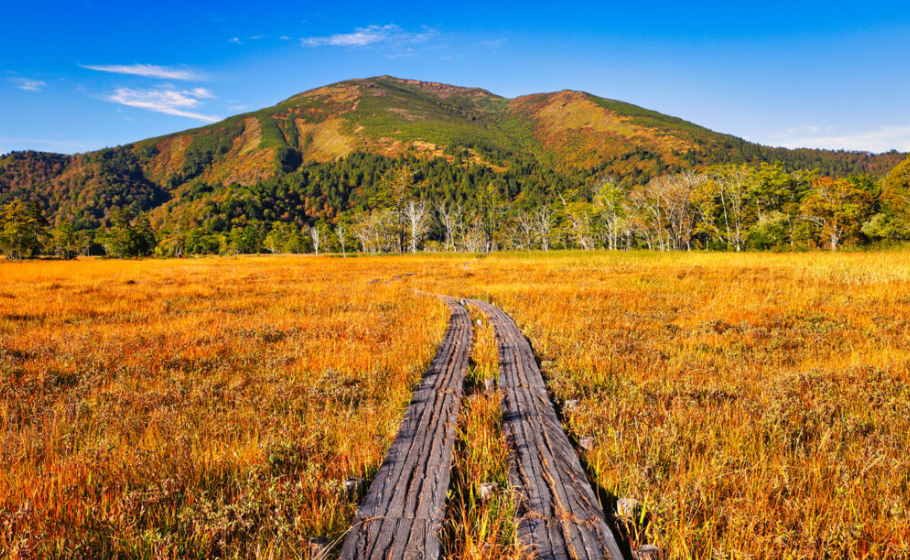
A unique aspect of a Mount Shibutsu hike is its remoteness, the rarity of the botany, and the conservation practice. It is an environmental respect that is required on a few climbs in Japan, and the flower display that is received in return is unique to this mountain.
Careful planning and strict adherence to access rules will make this mountain a rare and memorable experience, and the reward for careful planning will be scenery hard to find elsewhere in the country. For a similar kind of blog, read more about Mount Gassen.
