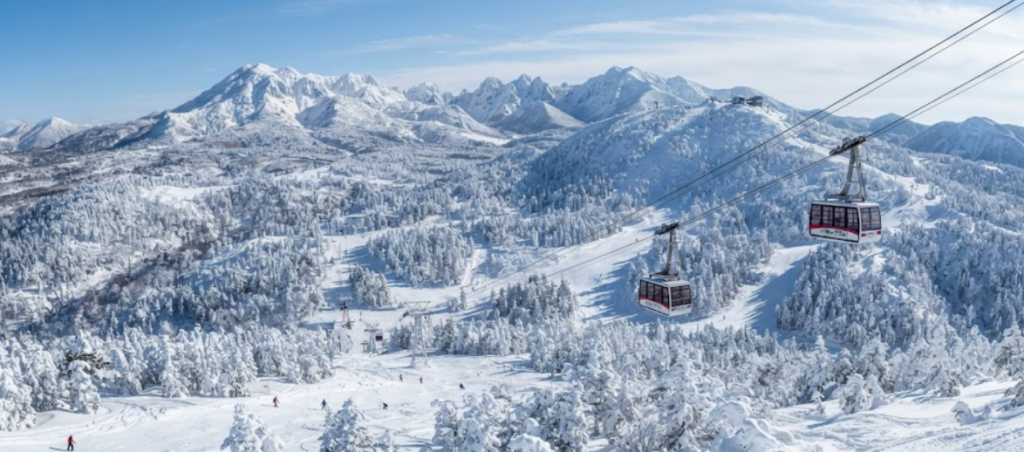
If you want to do any adventure in winter and searching for the best one then Hakkoda Ropeway Skiing is a great choice that you need to do. Hakkoda is one of the most famous places in Japan for skiing. This place is famous because the snow here is soft, beautiful forests and from there you can see the amazing views. Here you can see the beautiful snow and enjoy it there.
It doesn’t matter even if you are an experienced person or planning your first skiing trip, you will definitely enjoy this powdered snow. And from this guide you will understand everything you need to know and it will make it easier for you to plan your trip perfectly and enjoy your time in the beautiful Hakkoda mountains.
Table of Contents
Beautiful snowy mountains await everyone
What is Hakkoda Ropeway?
Hakkoda Ropeway is a cable car in Aomori in the north of Japan. Using this ropeway you can go from the bottom of the mountain to the top of Mount Tamoyachi in just 10 minutes.
You will see this ropeway through the year if you come in winter it will be a little busier. Many people come here to enjoy skiing, snowboarding and sightseeing in the snow.
After reaching the top of that mountain you can see the beautiful Hakkoda Mountains and forests that are covered with snow. If you go there on a clear day you may even see Mutsu Bay from the top of the mountain.
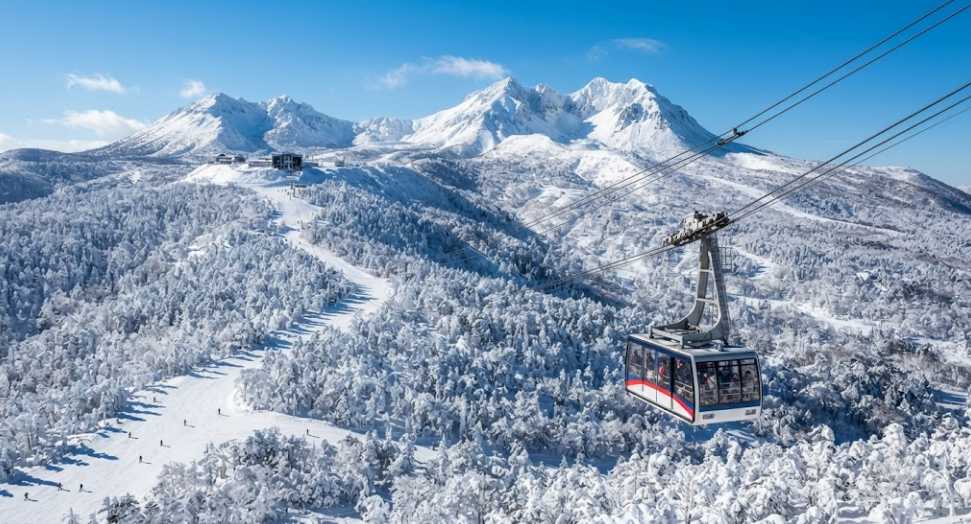
Explore safely with local guides
How to Reach Hakkoda Ropeway
Reaching Hakkoda Ropeway is very easy especially if you are starting your trip from Aomori City.
By Bus
Taking a bus is one of the easiest ways to reach Hakkoda Ropeway. You can take a direct bus from Aomori Station to Hakkoda Ropeway. You will have around a one-hour journey to reach. If you do not want to drive on snowy roads then coming by bus is a great choice.
By Car
You can also come by car which is a good option if you want to stop at some nearby places or don’t want to wait until the bus comes.
In the winter season the roads will be very snowy and slippery. If you are driving during the winter months make sure your car has winter tires. But it is a bit risky. You should drive slowly and carefully especially when there is heavy snow or ice on the roads.
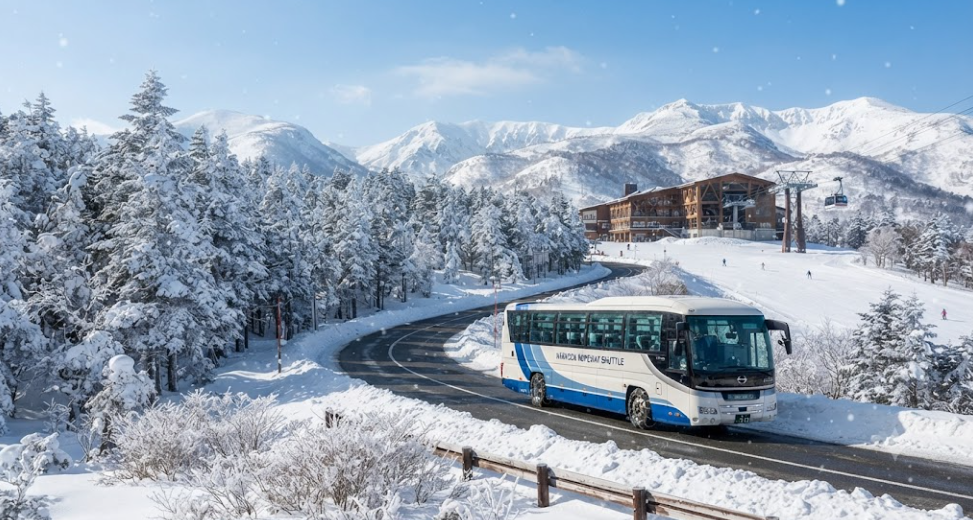
Convenient bus journey through snow
By Train
No train will go directly to Hakkoda Ropeway. First you need to take a train to Aomori Station. And from there you can take a bus to the ropeway. Once you arrive at Aomori Station you can continue your journey by bus.
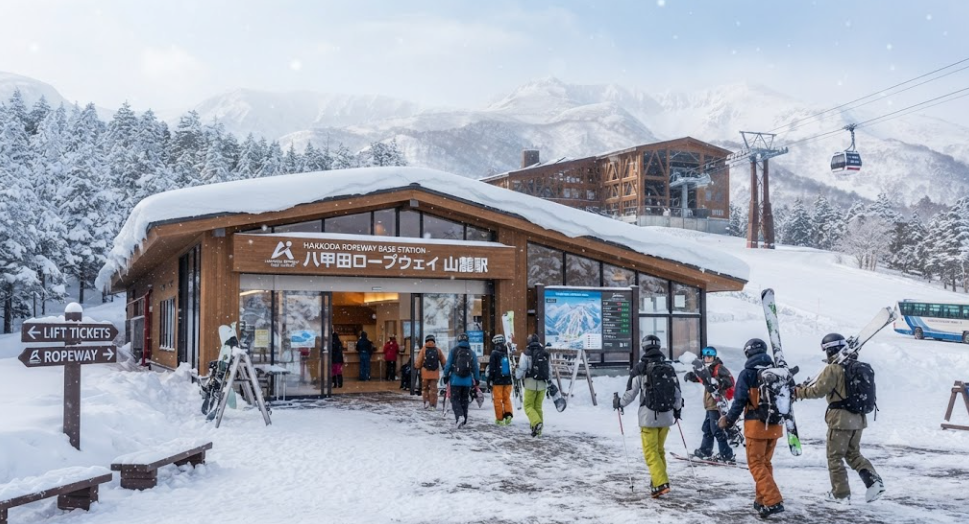
Start your snowy mountain journey
Ropeway Tickets
You can buy different types of tickets for the Hakkoda Ropeway. You can choose any ticket according to your convenience.
Visitors can usually choose from:
- One-way ticket – Good if you only need to travel up or down once.
- Round-trip ticket – A good choice if you want to go up and come back using the ropeway.
- Sightseeing ticket – Suitable for visitors who mainly want to enjoy the mountain views.
- Ski packages – A good option for people who are visiting Hakkoda for skiing.
Ticket prices can be different depending on the season and the type of ticket you choose. Prices are not the same in all seasons. So it is better to check the ticket prices and details before your trip.
If you are visiting during the busy winter season then it is better to check the ropeway operating times and weather conditions before you leave.
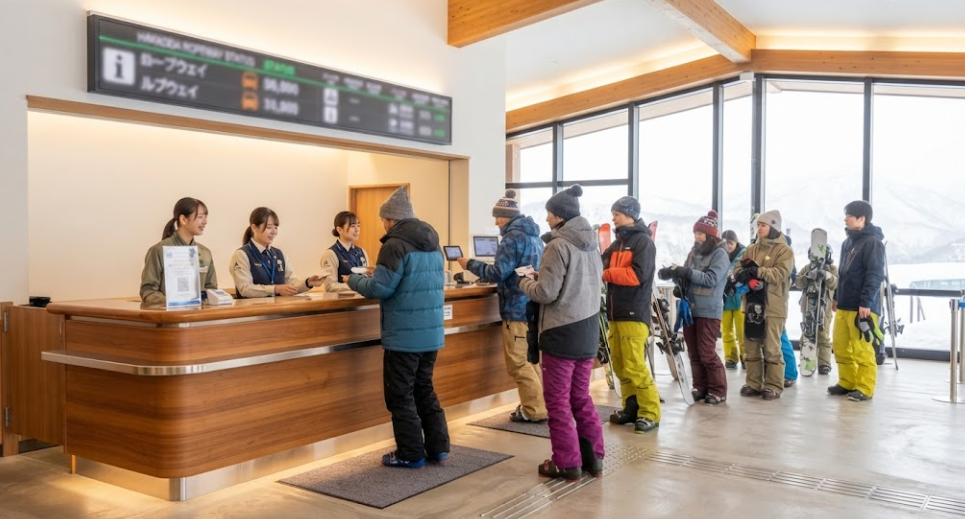
Purchase tickets before mountain adventure
Enjoy a Winter Adventure at Hakkoda
If you love winter adventures then Hakkoda Ropeway is a great place you need to visit in Japan. You can enjoy skiing, snowboarding, sightseeing and beautiful winter nature in one trip. Before going on your trip you need to know when does it get cold in Japan.
Hakkoda is famous for its powder snow, quiet forests, beautiful mountain views and Snow Monsters. The ropeway makes it easy to reach the higher parts of the mountain without a long walk. Even if you do not ski you can enjoy the ropeway ride and snowy views.
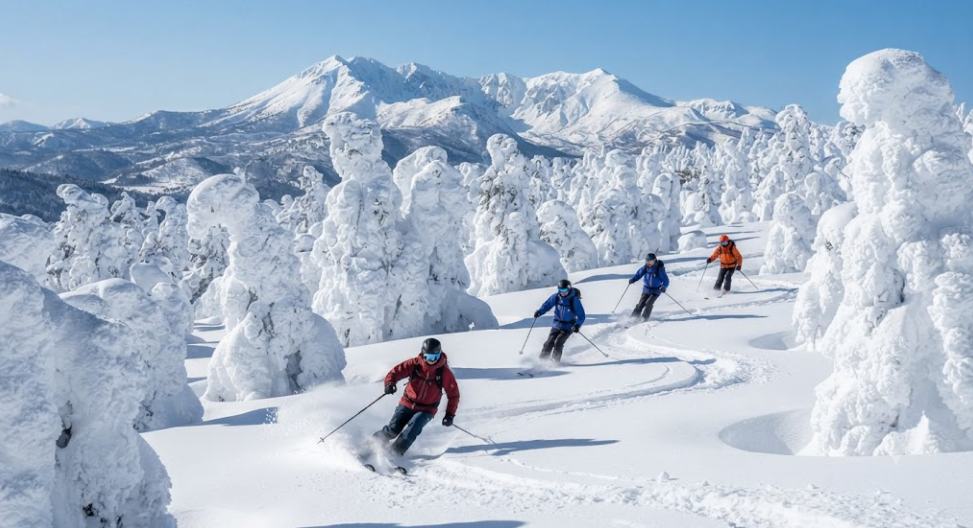
Discover magical Hakkoda snow monsters
The Snow Monsters (Juhyo)
Hakkoda’s most distinctive winter phenomenon is the juhyo, or “snow monsters.” These are not sculptures but living trees transformed by extreme conditions. Siberian winds carry moisture across the Sea of Japan; when the air strikes the Hakkoda peaks, supercooled droplets freeze instantly onto every branch and needle. Layer upon layer of rime ice builds through the winter until entire forests stand encased, forming towering white figures that shift shape with each storm.
The monsters reach their full stature from late January through February. The ropeway operates evening illuminations during this period, when the ice formations glow under coloured lights against the night sky. The phenomenon ranks among Japan’s three great juhyo sites, alongside Zao and Moriyoshi, but Hakkoda’s receive fewer visitors, offering a quieter encounter.
Viewing requires no skiing ability. The ropeway summit station places visitors directly among the formations, with a short walking circuit through the most concentrated stands.
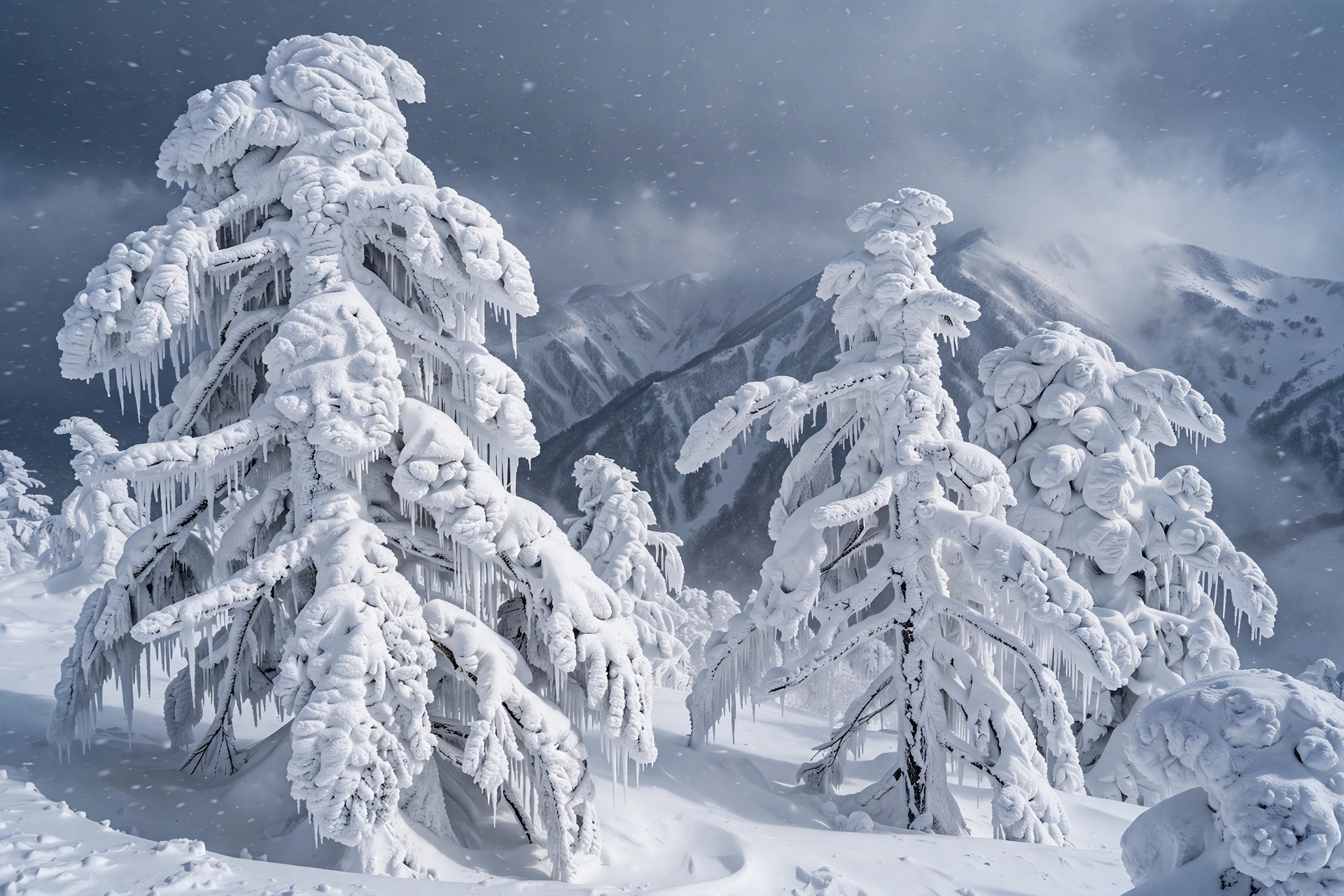
Backcountry Skiing and Summer Trails
Beyond the ropeway-served slopes, Hakkoda holds a reputation among Japan’s serious backcountry community. The mountain receives some of the heaviest snowfall in Honshu, and the terrain above the treeline offers long, open powder runs. Guided backcountry tours operate from the ropeway base, and local guides strongly recommend their use: the weather changes violently, whiteouts erase all landmarks, and the 1902 military disaster, in which 199 soldiers perished in a blizzard during a training march, remains a standing warning about this mountain’s severity.
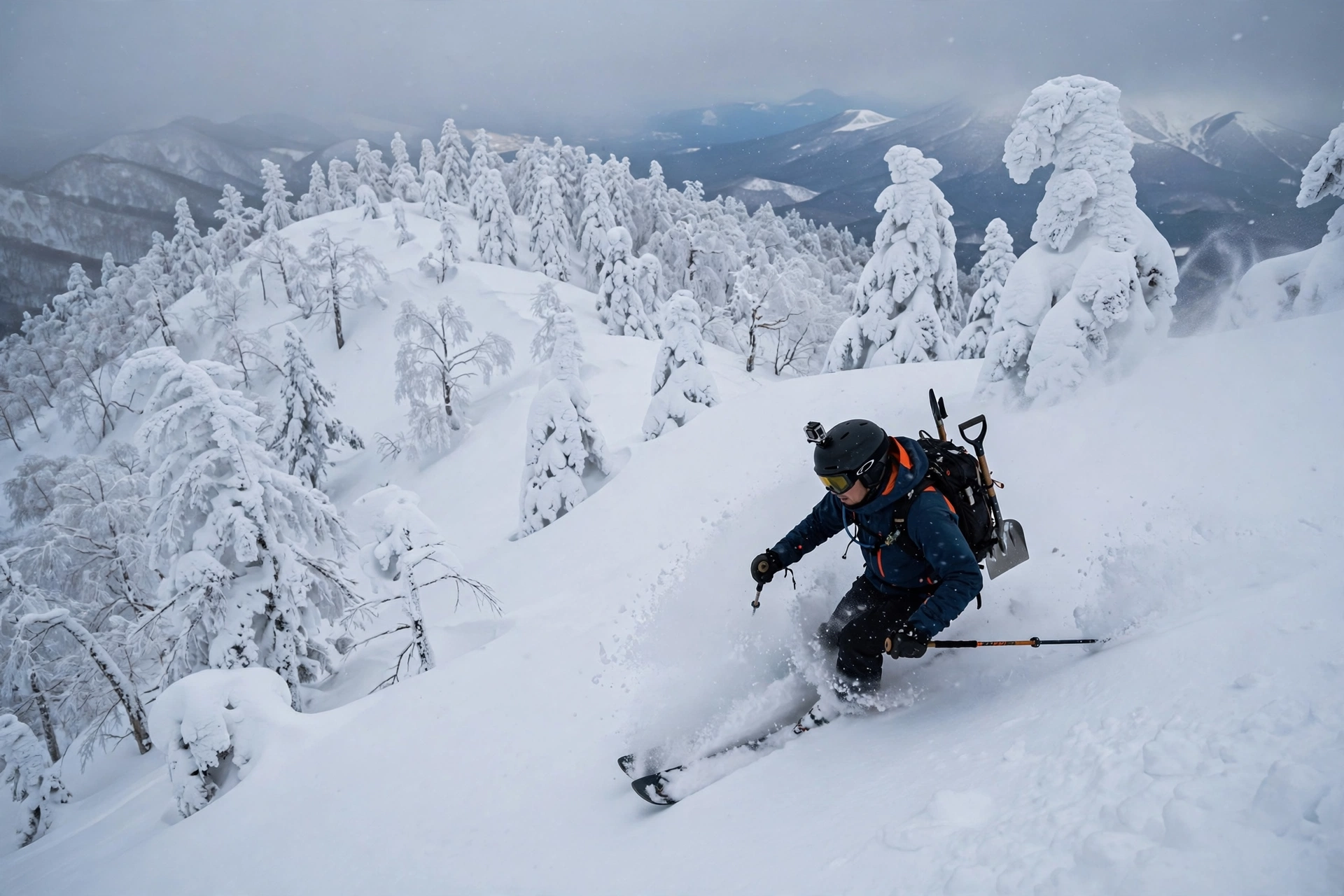
The ropeway runs year-round. From June to October, the same slopes become alpine hiking terrain. The summit area offers boardwalk trails through alpine wetlands, with views extending to Mutsu Bay on clear days. Autumn colours arrive early, typically peaking in late September, drawing a second season of ropeway visitors.
How We Would Plan a Hakkoda Ropeway Day
Hakkoda suits several kinds of visitor, and the right plan depends on what you came for. This is how we would match goals to plans using the details above:
| Your goal | What we would do | Why |
|---|---|---|
| See the snow monsters without skiing | Ride the ropeway to the summit station and walk the short circuit | Viewing needs no skiing ability, and the formations reach full stature from late January through February |
| Ski the ropeway-served slopes | Look at the ski package tickets and check operating times first | Ticket types and prices change by season |
| Ski beyond the ropeway slopes | Book a local guide | Weather changes violently, whiteouts erase landmarks, and the 1902 disaster remains a standing warning |
| Visit in summer or autumn | Ride the ropeway to the boardwalk trails | The ropeway runs year-round, and autumn colours typically peak in late September |
For getting there, we would take the direct bus from Aomori Station, about one hour, instead of driving. Winter roads are snowy and slippery, and if you do drive, winter tyres are essential. We would also aim for a clear day, since the guide notes you may see Mutsu Bay from the top, and check the ropeway’s operating times and the weather before leaving.
For the wider range and its summer routes, see our Hakkoda Mountains guide.
