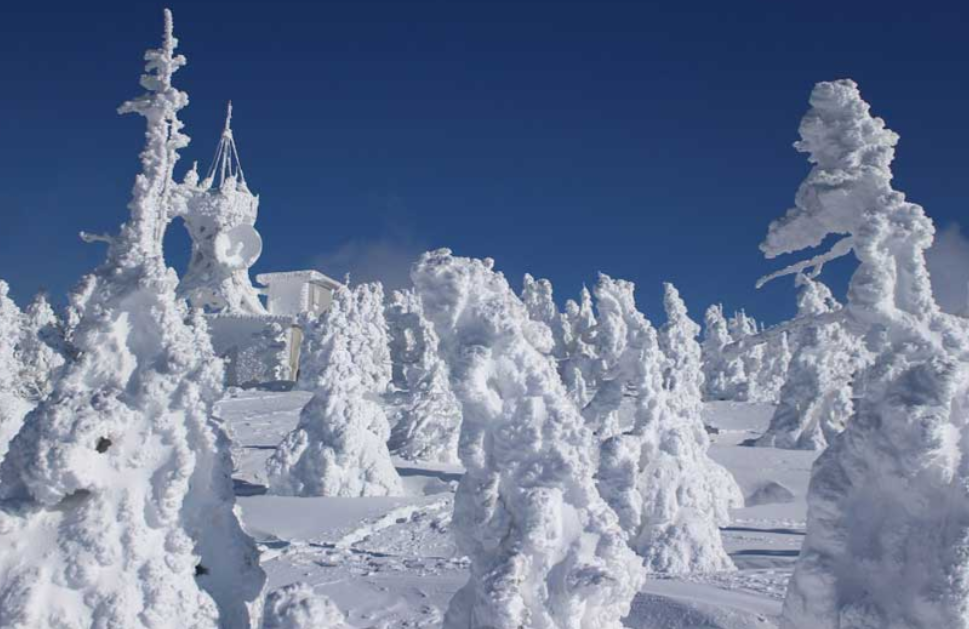
Hakkoda Tunnel is located beneath the Hakkoda Mountains in Aomori Prefecture, Japan. The highest peak in the range, Mount Odake, rises to 1,585 meters (5,200 ft). A remarkable civil engineering achievement was accomplished in constructing the Hakkoda Tunnel. A length of 26.45 kilometers (16.44 miles) was excavated under the mountains. In 2005, the tunnel was completed by engineers, and at the time it was hailed as one of the longest land-based railway tunnels in the world. It forms an important part of the Tohoku Shinkansen high-speed rail line.
A strong structural design was demanded when tunneling through mountain ranges with thick snow layers. Nowadays, the Hakkoda Tunnel is used by bullet trains, which maintain high speeds of more than 260 km/h on the line. These high-speed trains connect northern Honshu to Japan’s busy capital. In this article, a detailed analysis is presented regarding the history, engineering techniques, and overall impact of this infrastructure icon.
Table of Contents
- Technical Specifications and Key Milestones
- Structural Features
- Step 1 – Conduct Detailed Geological and Seismic Surveying
- Step 2 – Multi-Point Access Shafts & Inclined Adits
- Step 3 – Perform the Controlled Excavation with the NATM Method
- Step 4 – Implementation of High-Capacity Waterproofing and Drainage Systems
- Step 5 – Install High-Speed Slab Track, Overhead Power and Safety Systems
- Emergency Evacuation Infrastructure
- Structural Features
- The Legacy of Japan’s Alpine Tunnelling
Technical Specifications and Key Milestones
The vastness of the project emphasises the complexity of its structure.
Total Length: 26,455 meters (26.45 km)
Route: The tunnel runs on the Tohoku Shinkansen line between Shichinohe-Towada Station and Shin-Aomori Station.
Access: As an active high-speed rail tunnel, the Hakkoda Tunnel is not open to pedestrians or road vehicles. Travelers pass through it by boarding a Tohoku Shinkansen bullet train.
Depth: Approximately 200 m deep at its deepest point below the surface mountain ridges.
Construction Period: April 1998 – February 2005 (Breakthrough on 27th February 2005)
Operator: East Japan Railway Company (JR East)
Tunnel Method: New Austrian Tunnelling Method (NATM)
Structural Features
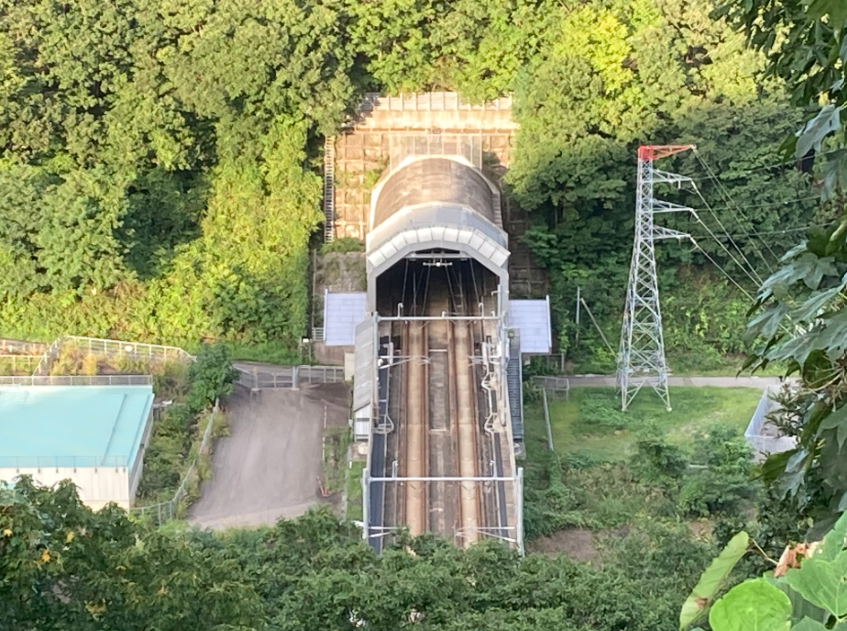
A step-by-step explanation is provided for the process of designing the mountain-passage track.
A 26 km tunnel had to be dug through unpredictable mountain rock, so a carefully planned engineering framework was needed. The Hakkoda Tunnel was constructed by civil engineers using a methodology that has been successfully applied in the past.
Step 1 – Conduct Detailed Geological and Seismic Surveying
In advance of excavation, geologists performed detailed studies of the geology of the Hakkoda mountain range.
The route crosses through high-pressure groundwater, soft rocks, fault zones, and complex volcanic strata. A hydrogeological model, core sampling, and seismic reflection surveys were utilised. A subsurface model of rock densities was created, and soft fault zones beneath the proposed Hakkoda Tunnel route were identified.
Step 2 – Multi-Point Access Shafts & Inclined Adits
This was required so that work could be carried out in parallel on several faces of the underground passage. Although the tunnel is 26 km in length, a reasonable amount of time was still needed to complete construction.
Several adits and vertical access shafts were blasted into the mountain from the surface by engineers. To ensure project time was significantly reduced, the main route was split into six construction sectors. This allowed multiple crews to tunnel towards each other at once.
Step 3 – Perform the Controlled Excavation with the NATM Method
A great deal of the core excavation was based on the use of the New Austrian Tunnelling Method (NATM), which uses the rock mass surrounding the tunnel to provide support.
Depending on the hardness of the rock, drill-and-blast methods were used alongside mechanical roadheaders. The workers had to carefully drill patterns into the rock face, load in explosives, and set the charges. The work crews removed the loose debris (muck) and then sprayed the new rock wall inside the Hakkoda Tunnel with a primary layer of fibre-reinforced sprayed concrete (shotcrete).
Step 4 – Implementation of High-Capacity Waterproofing and Drainage Systems
Water seepage is one of the biggest perils for underground concrete structures as well as high-speed rail tracks, and it is a potential long-term issue.
Thick, continuous waterproofing geotextile membranes were installed around the entire inside circumference of the excavated arch. Following this, perforated pipes and channels were installed at the bottom. This is to prevent the accumulation of underground spring water in the mountains and to keep the pressure from affecting the concrete lining of the Hakkoda Tunnel.
The permanent cast-in-place concrete final lining was then poured. After a period of stability in ground movement and waterproofing was achieved, the final structural interior shell was cast.
Heavy travelling hydraulic steel formwork arches were used so that the concrete could be pumped between the rock face membrane and the formwork. This resulted in a seamless, smooth interior lining for the tunnel, made of high-strength reinforced concrete. It could withstand decades of pressure exerted on it by high-speed train movements.
Step 5 – Install High-Speed Slab Track, Overhead Power and Safety Systems
The last stage involved turning the excavated cavern into a working high-speed railway.
Running high-speed trains through a 26 km enclosed area requires strong measures in terms of safety infrastructure and environmental engineering. As a train goes through a long tunnel at 260 km/h, it displaces a “wall” of air, creating micro-pressure waves at the far end of the tunnel. To mitigate this, flared portal hoods with top vents were added at both entries to the Hakkoda Tunnel. This helps reduce air-pressure changes and ensures the comfort of passengers inside the cabins.
Emergency Evacuation Infrastructure
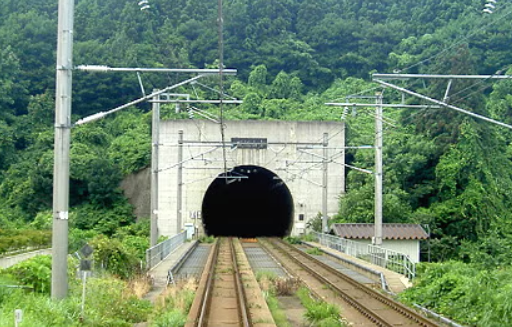
Access adits constructed during the build were converted into permanent emergency adits with stairwells and fans for smoke evacuation.
Continuous Walkways & Lighting: Continuous walkways run along both sides of the tracks, supported by emergency communication systems and backup power generators.
Fire Suppression Systems: Fire-resistant materials, automatic ventilation control, and dry-pipe standpipes provide a quick response in case of fire.
High-Speed Transit Link: This section of the Tohoku Shinkansen forms a direct high-speed link between Shichinohe-Towada Station and Shin-Aomori Station.
Travel Time Reduction: Travel time between Tokyo and Shin-Aomori is reduced to around 3 hours and 10 minutes.
Economic Significance: The tunnel avoids severe winter weather disturbances along the Hakkoda Pass, providing an all-weather connection for passengers and freight travelling to northern Honshu.
The Legacy of Japan’s Alpine Tunnelling
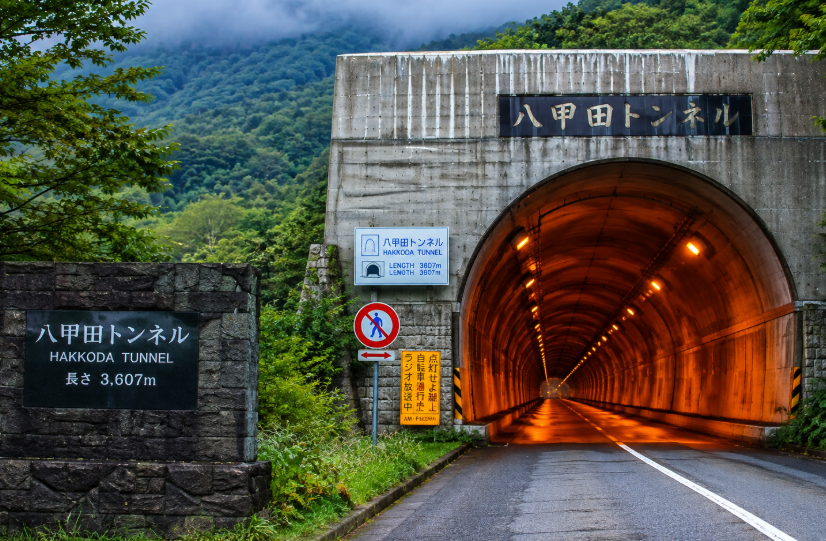
Once the breakthrough was achieved in February 2005, the Hakkoda Tunnel was heralded worldwide as a feat of tunnel construction. It has since been surpassed by longer terrestrial tunnels, such as the Gotthard Base Tunnel in Switzerland. However, it remains one of the longest rail tunnels in Asia.
Through the use of strict NATM techniques, innovative groundwater drainage, and advanced aerodynamic engineering, Japan was able to conquer the formidable topography of Aomori Prefecture. Overall, the Hakkoda Tunnel is a testament to the power of modern engineering to change the way people travel. It is truly a remarkable achievement of modern engineering and technology, demonstrating the capabilities of contemporary infrastructure and the power of human ingenuity to overcome the odds and bring people closer together.
