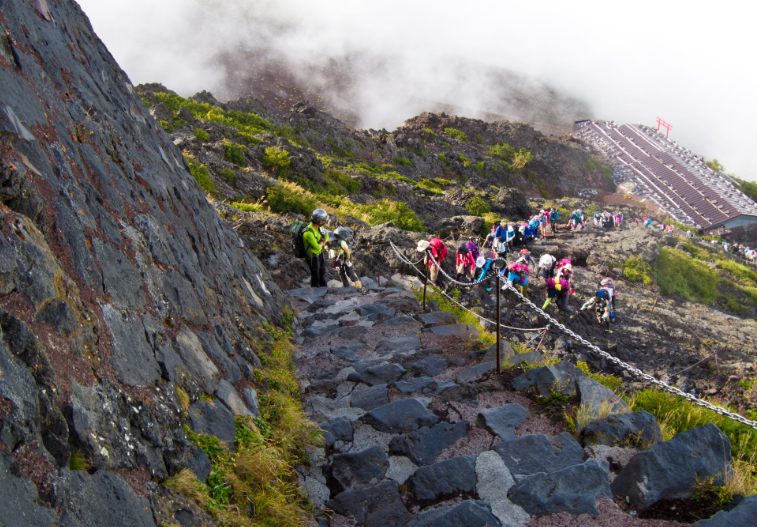
The Yoshida Trail is considered the most hiked trail on Mount Fuji. About half of all climbers are attracted to this route every climbing season. It is popular due to its access, facilities, and marked stations. This guide is designed to provide the individual climber with an understanding of what is necessary prior to attempting a climb. Every essential step is explained below, from reservations to descent.
Table of Contents
The Yoshida Trail
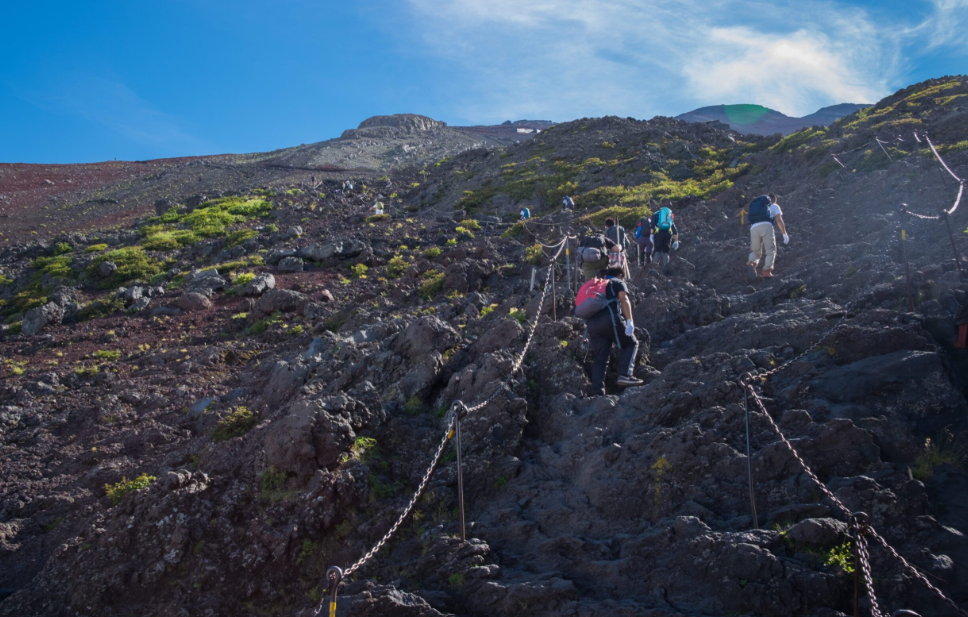
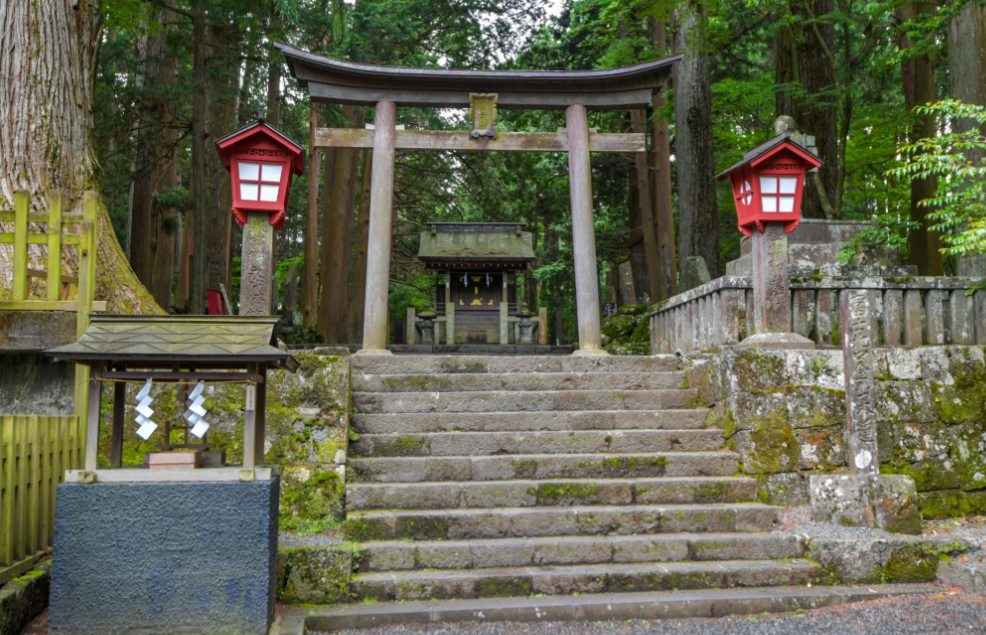
The Yoshida Trail is on the Yamanashi Prefecture side of Mount Fuji. It begins at the Fuji Subaru Line 5th Station, which can be reached by shuttle bus from Kawaguchiko Station. Unlike the three trails on the Shizuoka side, local authorities treat this trail as a separate entity and apply their own rules.
The route is popular among climbers due to its accessibility and the large number of people who climb it each summer. Therefore, in recent years, stringent management measures have been implemented.
Popularity of the Route
There are several huts along the way, and overnight stays are possible. There is also a first aid station close to the top. Due to these, the route is often recommended for beginners rather than the others.
Also, the trail is not quite as technical as some of the others, but it is without doubt a challenge to any hiker, especially at high elevations.
Climbing Season
The Yoshida Trail is open to climbers from about the 1st of July until mid-September. These dates have been determined by the government of the prefecture of Yamanashi and are subject to minor variations depending on snow conditions and weather from year to year.
It is strongly suggested that you do not climb outside this window. After the end of the season, mountain huts will be closed, and the availability of rescue services is not guaranteed.
Process of Reserving
A mandatory reservation system has been established for anyone who wants to use the Yoshida Trail. The steps listed below need to be taken and followed in sequence.
Step 1: Visit the official site
The official website for Mt. Fuji climbing is visited first. The registration for the next season usually opens in May or June, and it is recommended to register early.
Step 2: Date and time are selected.
The next preferred climbing date is selected. Bookings are essential if possible, as the weekends and mid-August Obon holiday period will fill up very quickly.
Step 3: Safety information is covered
Equipment, behavior, and altitude sickness rules are read through carefully. A short quiz may have to be done, and knowledge has to be established before proceeding.
Step 4: Pay the fee
The cost of this route is 4,000 yen per person, the same fee that applies to all four official routes of Mount Fuji. It’s payable by credit card or by convenience store payment systems.
Step 5: QR code is received
Upon payment, the climber receives a QR code and wristband instructions. This code will be displayed at the trailhead gate, and it is not possible to enter without this code.
If an overnight stay is planned, Step 6 is taken: a hut reservation is organized. There are no communal huts. The entrance permit is not combined with a hut booking. The average rate is 10,000 to 17,600 yen per person, and dinner is typically provided along with breakfast.
A reminder that this route has a daily climb limit of 4,000 day-trip climbers. Then, when this number is reached, there will be no more entry for the same day, with the exception of hut guests.
The Restrictions
Strict enforcement of the gate hours is requested on the Yoshida Trail. It is closed for entry from 2:00 PM to 3:00 AM, unless a mountain hut reservation has been secured. This was put in place to stop a practice called “bullet climbing”, which meant that the summit was climbed without stopping and without an overnight stay.
For safety reasons, bullet climbing is discouraged because of the increased risk of exhaustion and altitude sickness due to the climbing method.
The Ten Stations of the Trail
The Yoshida Trail consists of 10 stations, starting from the bottom and ending at the top. The 5th Station is the starting point for most climbers, as it is road accessible.
The 7th and 8th Stations are approached slowly, and huts can be seen grouped around these stations. Most tourists stay overnight here as it is the safest way to adjust to the altitude.
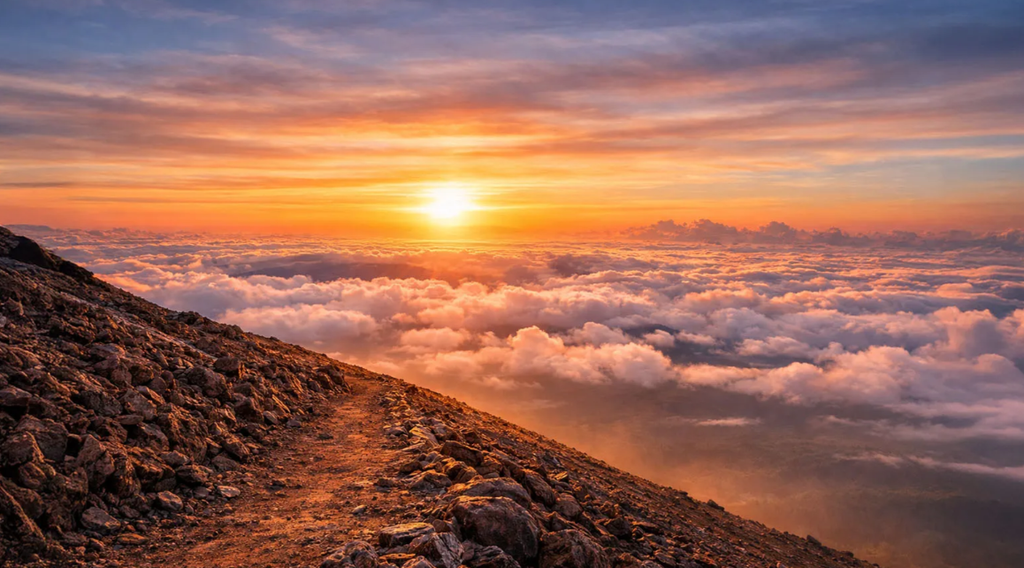
The final ascent to the 9th Station and to the top is frequently done at night. The time is set for the sunrise, called goraikō, to be visible from the top.
Packing Essentials
- A route checklist should be completed prior to attempting this route. The following items will be deemed essential.
- Layered clothing, since temperatures drop significantly near the summit.
- A headlamp is essential, as a lot of the approach is done before dawn and also before dusk.
- Trekking poles – these can be helpful on steep areas and on the downhill.
- Water and snacks are available at huts, but they are less plentiful and more expensive the higher you go.
- Cash, because you can’t use cards at all the stations.
- Weather gear – it’s a fact that weather changes quickly near the summit.
- Quick energy snacks, as appetite may decrease at high altitudes.
Approach to the Trailhead
It is typically accessed via Kawaguchiko Station, which is accessible by a direct train or highway bus from central Tokyo. After arriving at that spot, a shuttle bus is taken to the Fuji Subaru Line 5th Station, where the ascent actually starts.
Private vehicles are not allowed to drive straight to the 5th Station during peak weeks. A park-and-ride scheme is in place instead, and almost all climbers use the shuttles as a result. Tickets for the shuttle, which often has a long queue at the station on weekends, are advisable.
Avoiding Altitude Sickness
Many climbers suffer from altitude sickness on this route. Even if you are physically fit, you may experience headaches, dizziness, and nausea.
Almost all guides suggest going slow. It is important to take breaks often and to stay hydrated during the climb. It is recommended that an overnight stay at the 7th or 8th Station huts is advised, as this is how gradual acclimatisation is achieved as opposed to one push.
If a descent is needed, it should be carried out promptly if any of the symptoms are present and are not relieved by rest. This is when the guides and hut staff trained along the trail will be able to help.
The Descent Route
This track descends separately from the ascent track for most of its way. Loose volcanic gravel is encountered on this section, and this is where trekking poles are found most valuable.
This is a time when you may have to take extra care as visibility is reduced and fatigue may be highest. Falls on the Yoshida Trail are more common on the downhill side of the trail than on the uphill side.
Recommendations to the Route
The majority of climbers still pick the Yoshida Trail each year despite the addition of fees and the new rules. The core points mentioned are the facilities it provides, its ease of access from Tokyo, and its hut network.
The route is recommended by many people who have climbed Mount Fuji for the first time and think that it is the safest and most supported route. However, care must always be taken, an early reservation is always necessary, and the demands of the mountain respected.
Final Thoughts
This route is a reward for careful preparation and a punishment for poor planning, so make sure you’re well prepared and not too tired or suffering from altitude sickness. Bookings should be made early, huts should be booked ahead of time, and a packing list should not be forgotten.
If these steps are observed, the climber’s report of the summiting experience is most likely to be unforgettable. Often, the sunrise seen from above the clouds is described as the fruit of all the hardships endured throughout the journey. For those who make the climb, it’s an experience that is often not forgotten.
Reservations, rules, and fees vary by season. The official climbing site of Mt Fuji and the Yamanashi prefectural government should always be consulted prior to finalising the trip.

1 thought on “Yoshida Trail: The Manual to Mount Fuji’s Most Popular Route”