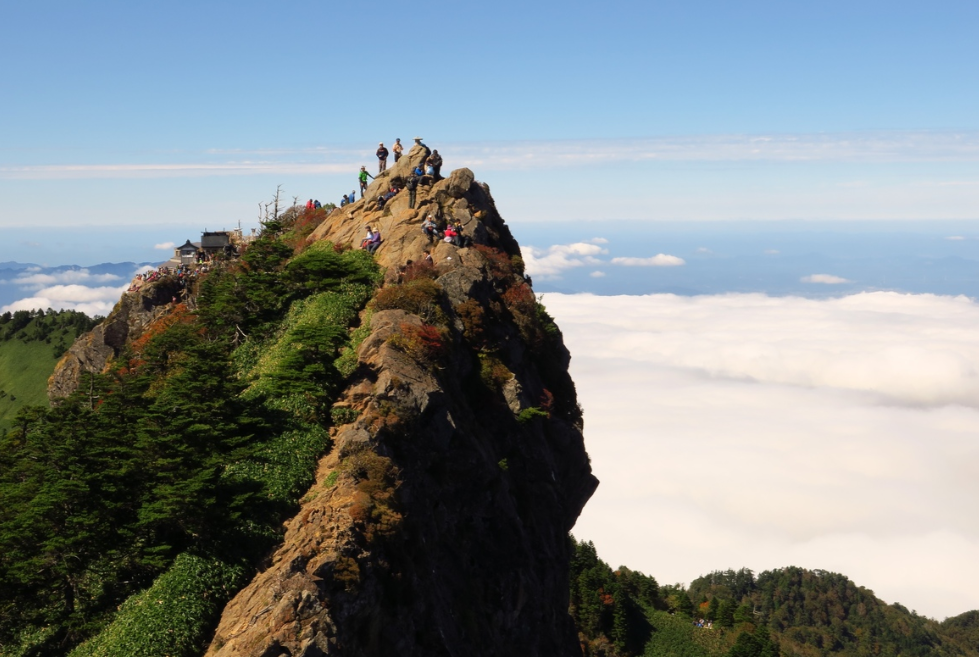
Mount Ishizuchi, which rises to 1,982 m, is the tallest peak in Western Japan. It stands majestically above the Shikoku region in Ehime Prefecture. A tall, imposing rock, it has been the focal point of Shugendo. It is an ancient Japanese spiritual practice that involves asceticism, worship of the mountains, Shinto beliefs, and esoteric Buddhism, for more than a millennium. Mount Ishizuchi is known as one of Japan’s Seven Sacred Mountains. Today, both modern outdoor enthusiasts and spiritual pilgrims come to its rugged granite cliffs to push their bodies to the limit, soak up the panoramic alpine vistas, and enjoy the world-famous iron chain ascents (Kusari-ba).
With vertical rock faces and heavy iron chains, Mount Ishizuchi promises an unmatched mountain experience. To climb this holy peak, one must be well-prepared and have physical agility on exposed rock ridges.
Table of Contents
The Mountain’s Topography and Sacred Sites
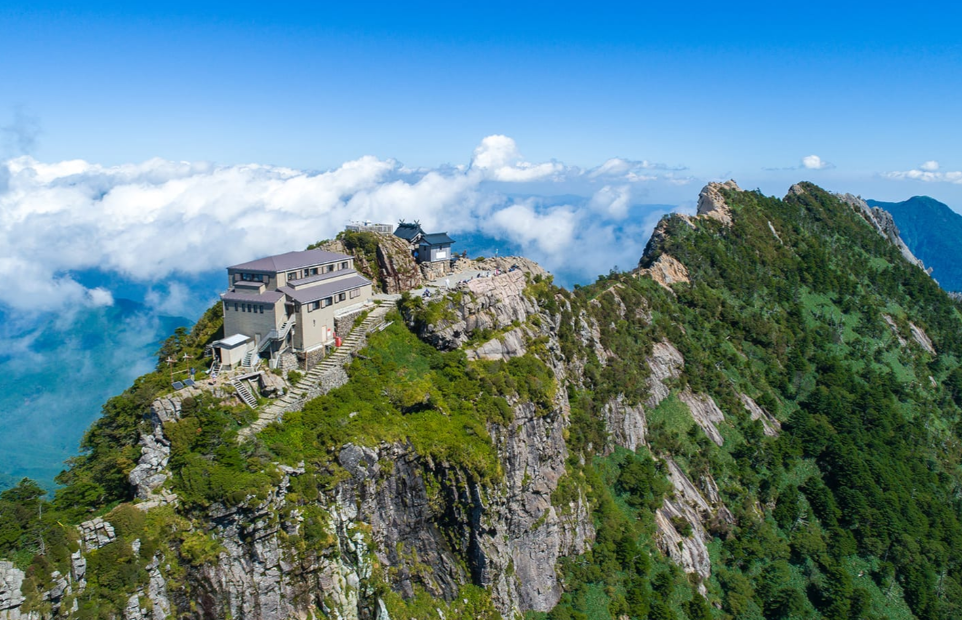
Mount Ishizuchi has unique sections and spiritual landmarks to know before you embark on your trek. Ishizuchi Shrine Jouju-sha summit sanctuary is located on the main accessible peak of the mountain called Misen Summit (1,972 m). It’s a wide, rocky ridge that is the stopping point and terminus for many hikers.
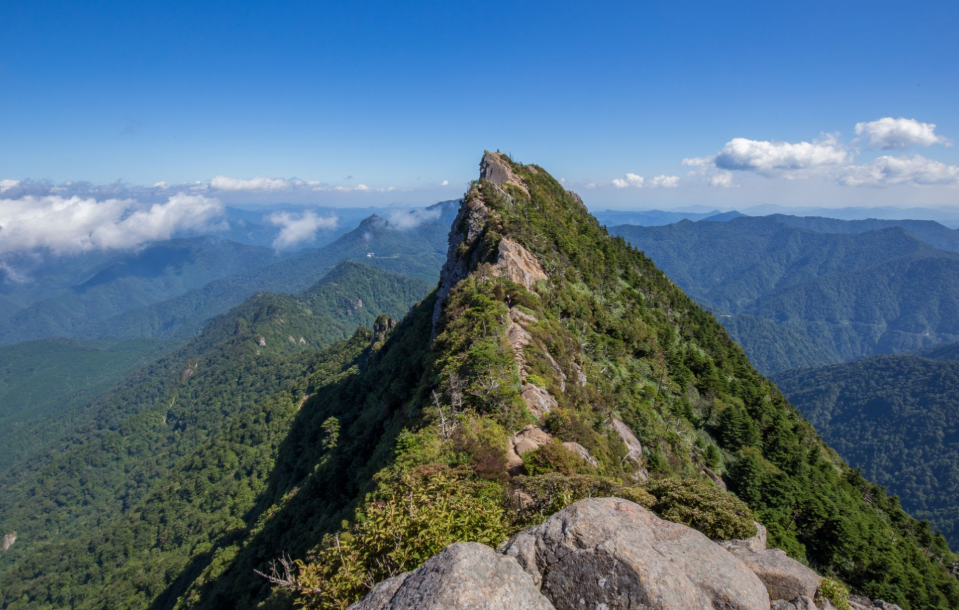
Tengudake (1,982 m): The highest peak in Western Japan. This iconic pinnacle is accessed by a knife-edge rocky ridge walk from Misen. It requires surefootedness and a head for heights.
The Iron Chains (Kusari-ba): Four sets of enormous handmade iron chains (Ichi-no-kusari, Ni-no-kusari, San-no-kusari, and the lower Ichi-no-kusari) were firmly fastened to vertical rock faces that presented an extreme challenge for climbing ascetics.
At 1,400 metres, the Omotesando trail lies at the Ishizuchi Shrine Head Sanctuary (Jouju-sha). It is the spiritual gateway where mountain ascetics gather before taking on the upper slopes.
Step-by-Step
The Step-by-Step Method is designed to carry out a safe and successful ascent.
To climb the highest mountains of Western Japan, there is a need for well-organised preparation to cover the challenging climbs of steep ascents, narrow summit ridges, and vertical chains. Here are the key steps to take to make your Mt. Ishizuchi climbing experience a success.
Step 1
The two major routes to the summit of Mount Ishizuchi are the Omotesando trail (from Saijo up the Ishizuchi Ropeway) and the Tsuchigoya trail (from a high-altitude mountain pass on the Ishizuchi Skyline road). The Omotesando trail is a longer climb (3.5 to 4 hours) through all of the iron chain sections, while the Tsuchigoya trail is a gentler 2.5-hour ridge hike with boardwalks along the scenic trail. The first step to planning your trip to Mount Ishizuchi is choosing the route that is best suited to your climbing experience.
Step 2
Once the equipment and personal protective gear are ready, it is time to put it all together.
Steep granite steps and high-altitude exposed ridgelines are where proper mountain gear is essential. Hiking boots should have thick, high-traction rubber soles to handle slippery granite and loose gravel. Bring heavy-duty leather or rubber work gloves to protect your hands from cold, abrasive chain links on the iron chain faces. Take a light rockfall helmet for the chains, a waterproof windbreaker shell, and a minimum of 2 litres of water for each person.
Step 3
In order to get to the mountain gateways, one has to arrange for public transportation or private transportation through Ehime Prefecture. For the Omotesando trail, take the Setouchi Bus from JR Iyo-Saijo Station to Ishizuchi Ropeway Mae Station, then take the ropeway up to the 1,300 m-high Jouju Station (成就). If one is driving a rental car along the Ishizuchi Skyline road, one can head to the Tsuchigoya trailhead parking area, which is at 1,490 metres elevation.
Step 4
After leaving the top station of the Ishizuchi Ropeway, take a 20-minute walk through the forest along a paved path to the Jouju-sha complex of the Ishizuchi Shrine. Step through the wooden Torii gate at the formal beginning of the upper mountain path on Mount Ishizuchi, by paying respects at the main hall, ringing the ceremonial bell, and registering your hike at the trail station.
Step 5
Decide whether to climb the iron chains or detour around them.
The well-known Kusari-ba chain sections are on the way to the top. The Chains (Kusari-ba): Set your feet firmly on the wide metal chain links and pull up with both hands. Always have 3 points of contact and leave plenty of space between you and the climber above you. The Bypass Paths (Onna-zaka): When vertigo, lack of climbing expertise, or wet conditions occur, the wooden staircases (Onna-zaka) that avoid all the chain sections are a safe, gentle way to the top of Mount Ishizuchi.
Step 6
Once at the Misen Summit Sanctuary, you’ll need to decide if you want to make the final traverse to the actual summit. Tengudake is about 200 m beyond Misen over a rock spine, devoid of any vegetation, with steep drop-offs on both sides. Step carefully and avoid walking around rocks in high winds. The steep peak of Tengudake rewards surefooted hikers with views out over the Seto Inland Sea and mountain ranges of Shikoku.
Step 7
As important as the climb up is a controlled descent.
Do not descend the chains on your way down; take the detour steps instead, because down-climbing the chains greatly raises fall risks. Keep to paths to avoid any erosion of fragile alpine soils, collect all waste, and avoid picking wildflowers or removing native alpine rocks from Mount Ishizuchi.
Route Statistics and Profile Comparisons
Head back to Omotesando station via the Ishizuchi Ropeway; the trail is great for a stroll.
Route distance: 9.2 km (return) | Total time: ~6.5 hours | Elevation gain: ~880 m | Level: Strenuous
Highlights: All 4 iron chain climbs, classic pilgrim pathways and historic shrine sites.
Tsuchigoya Trail
Distance: 9.0 km (round trip) | Duration: ~4.5 hours | Elevation Gain: ~500 m | Level: Moderate
Benefits: Scenic high-ridge views, gradual wooden boardwalks, and a shorter overall time to climb.
Traverse from Misen to Tengudake Ridge
The hike is a very strenuous, exposed traverse of approximately 0.4 km (round trip).
Highlights: Narrow rock ridge scrambles and reaching the highest point in Western Japan.
Weather and Seasonal Highlights on the Peak
Mount Ishizuchi is a perfect place to enjoy the beauty of nature each season of the year.
- Spring (May to June)
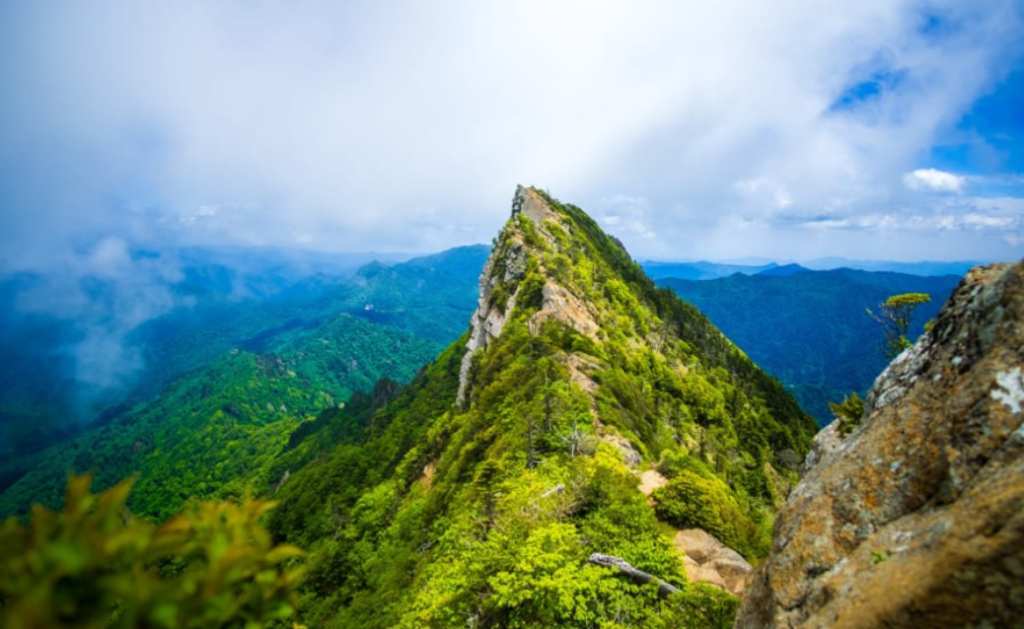
In late spring, fresh green foliage and colour from pink Akebono-tsutsuji (Rhododendron) appear throughout the lower cliffs, along with pleasant climbing weather.
- Summer (July to August)
The Mountain Opening Festival, a festival called Oyama-biraki, takes place from July 1st to 10th. Thousands of white-clad ascetics offer traditional prayers as they ascend the peak. The daytime temperatures are still cool, in comparison to the wet lowlands.
- Fall (October – Early November)
Fall is probably the best season for visiting. Rocky crags around Tengudake are covered in bright red maples and yellow beech, as well as numerous other tree species.
- Winter (December – March)
In winter, these sharp peaks are covered in snow and rosy rime ice (Juhyo). When it’s time for winter climbing, the mountain turns into a technical climbing terrain, and Mount Ishizuchi demands crampons, ice axes, and mountaineering skills.
Plan Your Sacred Pilgrimage
Mount Ishizuchi remains one of Japan’s most exciting outdoor attractions, where ancient spiritual customs meet alpine scrambles. With the right precautions, reverence for the sacred mountain, and the right kind of experience, climbing the summit of Western Japan’s highest peak will be a safe and memorable one.
