
Mount Oyama has been drawing visitors for far longer than hiking was a hobby. For centuries, pilgrims have climbed this 1,252-meter Tanzawa peak to pray for rain at Afuri Shrine — and today the mountain serves two audiences at once. Casual visitors ride the cable car to the lower shrine, eat the famous tofu, and enjoy the views. Hikers keep going: another 550 meters of steep stone steps to a summit with a panorama stretching from Sagami Bay to Mount Fuji. A Mount Oyama hike is really two trips in one, and this guide helps you decide which one is yours — or how to do both.
We recommend Oyama as one of the most culturally rich day hikes near Tokyo. The mountain packs a pilgrimage tradition, a working cable car, shrine architecture, and a genuinely demanding summit push into a single day trip from Shinjuku. But it has quirks that catch first-timers out: the cable car does not go to the summit, it takes cash only, and there are no toilets on the upper trail. Read this guide first and none of that will surprise you.
Table of Contents
Quick Facts
| Item | Detail |
|---|---|
| Elevation | 1,252 m |
| Location | Tanzawa mountains, Kanagawa Prefecture |
| Difficulty | Easy (cable car + lower shrine) to strenuous (summit via stone steps) |
| Typical time | 2–3 hours for the shrine visit; 5–6 hours round trip for the summit |
| Best season | Year-round; autumn foliage is the peak season |
| Access summary | Odakyu Line Shinjuku → Isehara (~1 hour), bus to the cable car, cable car to the lower shrine |
Getting There: Train, Bus, and Cable Car
Start at Shinjuku and take the Odakyu Odawara Line to Isehara Station — the ride takes about 54–59 minutes on a rapid service. Check the current fare on the Odakyu website before visiting, as fares change and the line offers several service types with different journey times.
At Isehara’s north exit, board a Kanagawa Chuo Kotsu (Kanachu) bus bound for the “Oyama Cable” stop. The bus takes about 25–30 minutes and costs around ¥320. From the bus stop, the stone-stepped shopping street called Koma-sando climbs for 15–20 minutes to the cable car lower station — lined with tofu shops and souvenir stalls, it is a pleasant warm-up and your last chance for snacks.
The Oyama Cable Car then lifts you to the lower Afuri Shrine area. The current fare is approximately ¥640 one way and ¥1,120 round trip. Two critical details: first, older blog posts quoting ¥450/¥850 are stale — use the current figures. Second, and more importantly, the cable car is CASH ONLY — IC cards like Suica and Pasmo are not accepted. This catches out nearly every first-timer, so stop at an ATM before leaving Isehara Station.
Trailhead and Route Options
Here is the single most misunderstood fact about this mountain: the cable car does not reach the summit. Its top station serves the lower Afuri Shrine at 696 meters. Everything above that is on foot. Plan accordingly.
Option 1: Cable Car + Lower Afuri Shrine (Easiest)
Ride the cable car up, explore the lower shrine — whose terrace looks out over the Kanto plain toward Sagami Bay — have lunch, and ride back down. This needs no hiking fitness at all and still delivers shrine culture, views, and the famous tofu. Allow 2–3 hours including the Koma-sando stroll.
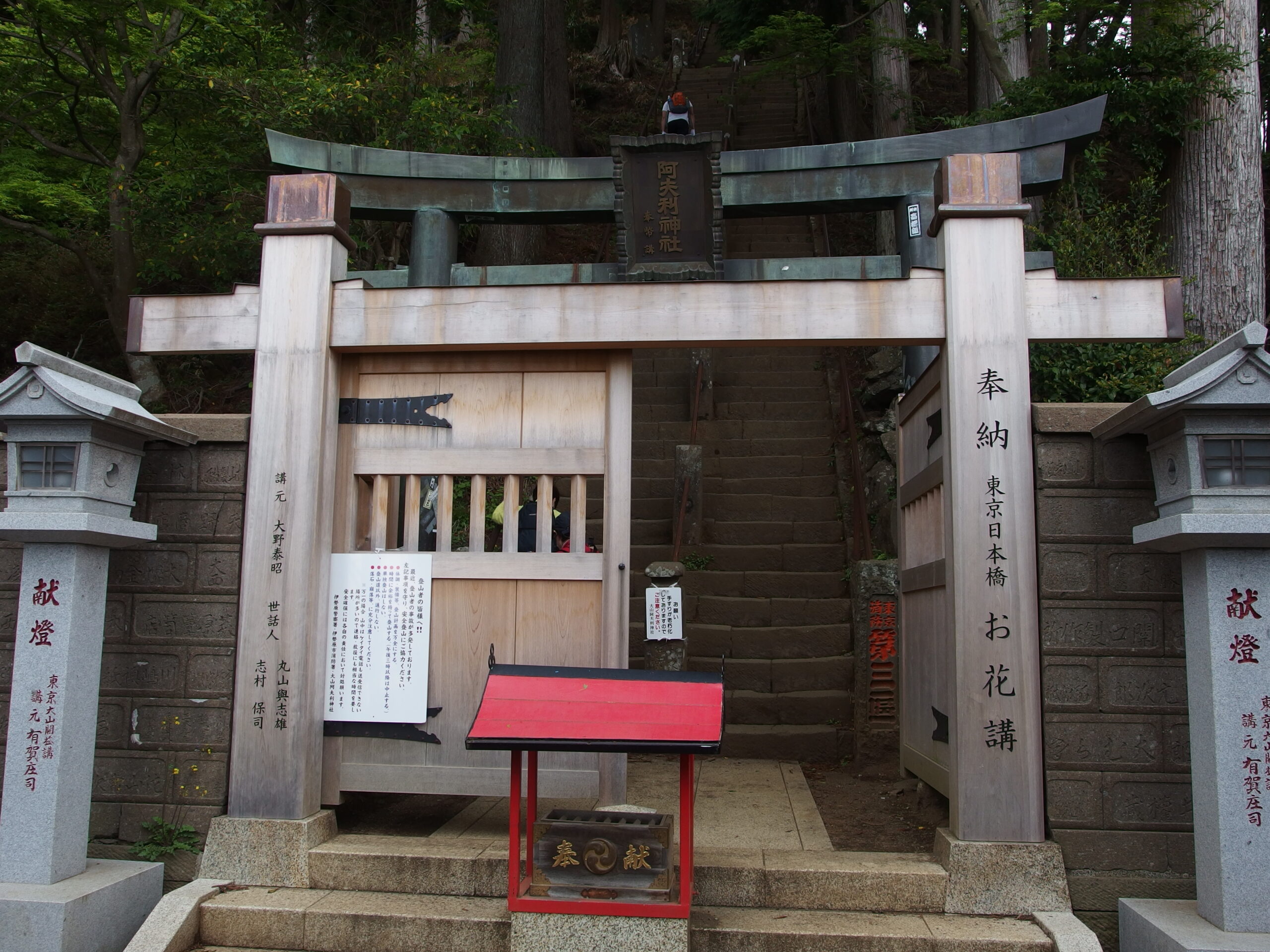
Option 2: The Summit Push from the Lower Shrine
From the lower shrine (696 m), the summit trail climbs about 550 meters over steep, seemingly endless stone steps. Most hikers need 1.5–2 hours up. There are no switchback shortcuts and — note this — no toilets between the lower shrine and the summit, so use the facilities at the shrine before setting out. The summit rewards the effort: a 360-degree-class panorama taking in Sagami Bay, the Izu Peninsula, and on clear days Mount Fuji.
At the top you will find the upper Afuri Shrine, quieter and more atmospheric than its lower counterpart, along with a small rest area where through-hikers pause before continuing along the Tanzawa ridge. The descent back to the lower shrine takes most people around an hour — faster than the climb, but harder on the joints, which is exactly where trekking poles earn their place in your pack. On a clear winter morning, when the air is at its sharpest, the Fuji view from the summit steps is one of the finest near-Tokyo panoramas you can reach in a day.
Option 3: On Foot from the Base (Onna-zaka vs. Otoko-zaka)
Purists skip the cable car and walk from the base. Two traditional paths climb to the lower shrine area: Onna-zaka, the gentler “women’s slope,” and Otoko-zaka, the steeper “men’s slope.” The names are historical rather than prescriptive — choose based on your legs. Either adds a solid hour-plus of climbing before you even reach the lower shrine, making this a full, demanding day when combined with the summit.
How Hard Is It, Honestly?
It depends entirely on where you stop. Cable car plus lower shrine: easy, suitable for anyone who can manage stairs and a 20-minute uphill stroll. Summit from the lower shrine: strenuous — 550 meters of gain on unrelenting stone steps is a serious workout, roughly comparable to climbing 180 floors. The steps are the crux; they are regular and well-maintained but punishing on knees, which is why the descent deserves as much respect as the climb. Full base-to-summit on foot via Otoko-zaka: a hard day out. Be honest about which version you are signing up for.
Seasonal Notes
Oyama is a year-round mountain, with autumn foliage as the headline season — the maples around the shrine and along Koma-sando draw the biggest crowds of the year, so start early on autumn weekends. Spring is mild and fresh; summer is hot and humid on the stone steps, so carry extra water and start at opening time; winter brings crisp, clear views and far fewer people, though the upper steps can be icy after cold snaps. Golden Week in late April and early May is another busy window — the fresh green is beautiful, but the cable car queues return, so the early-start advice applies then too. The cable car runs throughout the year, but check its schedule for seasonal timetable changes before visiting.
What to Pack
- Cash: the cable car takes cash only — no IC cards. Bring enough for the round trip plus lunch.
- Trekking poles: our single strongest gear recommendation for Oyama. The stone-step descent is brutal on knees, and poles transform it.
- Grippy shoes: the stone steps are polished smooth in places and slippery when wet.
- Water and snacks: eat at the lower shrine area — there is nothing above it.
- Rain gear and layers: the summit is exposed and noticeably cooler than the base.
- A small towel: you will earn it on those steps.
Where to Stay
Oyama is an easy day trip from anywhere in Tokyo — Shinjuku to the summit and back fits comfortably in a day. If you want to linger, Isehara and neighboring Hadano have business hotels, and the area around the base has traditional inns. An overnight stay lets you start at the first cable car and have the lower shrine terrace to yourself before the crowds. For a second mountain day nearby, Mount Takao is the obvious pairing — see how both rank on our best one-day hikes in Japan list.
Our Tips: What We’d Tell a Friend
- Withdraw cash at Isehara Station. We cannot stress this enough: the cable car is cash only, and there is no ATM at the cable car station. Every trip report that mentions a ruined plan mentions this.
- Use the toilet at the lower shrine. There are no facilities between the lower shrine and the summit. This is the most practical tip in this entire guide.
- Bring poles even if you never use them. The descent’s stone steps destroy knees. Poles turn a hobbling finish into a comfortable one — we recommend them more strongly here than on almost any other Tokyo-area hike.
- Eat the tofu. Oyama’s tofu cuisine grew out of the pilgrimage tradition — the mountain’s pure water made it famous. The restaurants along Koma-sando serve yudofu (hot tofu) and tofu kaiseki sets that are a destination in their own right. Lunch here is part of the hike, not a break from it.
- Start at the first cable car on autumn weekends. The foliage crowds are real, and the cable car cabins are small. An early start buys you a quiet shrine terrace and your pick of the summit steps.
Mount Oyama FAQs
Does the cable car go all the way to the summit?
No — this is the most common misunderstanding about Mount Oyama. The cable car’s top station serves the lower Afuri Shrine at 696 meters. The summit, at 1,252 meters, is another 1.5–2 hours of steep stone steps above the shrine. If you want the summit, you are hiking for it.
Can I pay for the cable car with Suica or Pasmo?
No. The Oyama Cable Car accepts cash only — IC cards are not accepted. Withdraw cash at Isehara Station before taking the bus up, because there is no ATM at the cable car station.
How long does it take from the lower shrine to the summit?
Most hikers need 1.5–2 hours up, climbing about 550 meters on steep stone steps. The descent takes around an hour. Add your cable car, bus, and Koma-sando time on top when planning the full day.
What is the difference between Onna-zaka and Otoko-zaka?
They are the two traditional footpaths from the base to the lower shrine area: Onna-zaka (“women’s slope”) is the gentler, more gradual route, while Otoko-zaka (“men’s slope”) is steeper and more direct. The names are historical. If you are walking up instead of riding the cable car, pick based on your fitness and how much day you have left.
Are there toilets on the upper trail?
No. There are no toilets between the lower Afuri Shrine and the summit, so use the facilities at the shrine before starting the climb. This is the detail that surprises the most hikers.
Why is Mount Oyama famous for rain prayers?
Oyama Afuri Shrine has a long tradition as a destination for rain prayers — “afuri” relates to rainfall, and for centuries farmers and pilgrims climbed the mountain to pray for rain for their crops. That pilgrimage history is why the mountain developed its lodgings, its tofu cuisine, and the Koma-sando approach: Oyama was a sacred destination long before it was a hiking spot.
The Bottom Line
A Mount Oyama hike gives you what few Tokyo day trips can: a living pilgrimage tradition, great food, a cable car for the easy version, and a genuinely tough summit for the ambitious version. Bring cash, bring poles, use the shrine toilets, and decide at the lower shrine whether today is a culture day or a summit day. Either way, you will eat well.
