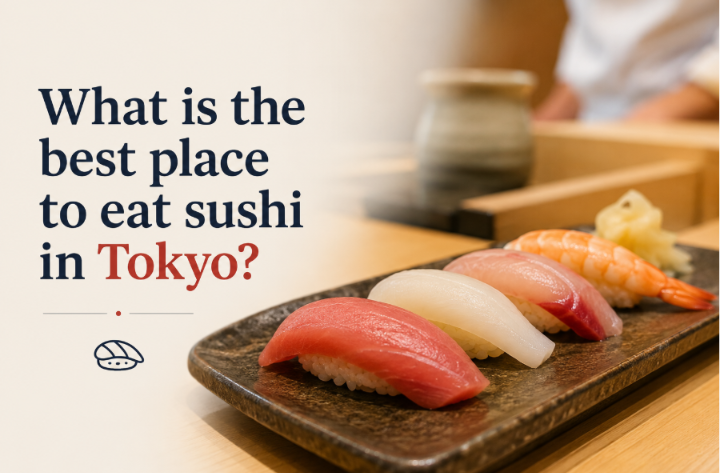
There is no single best place for sushi in Tokyo, because the right choice depends on your budget, how much time you have and what kind of experience you want. This guide compares the main options so you can match a place to your plans.
We have not eaten at every restaurant in the city, so rather than ranking individual shops we explain the types of place, where they cluster, and how to avoid common problems such as long queues and closed days.
Table of Contents
Choosing by Type of Place
| Type | Best for | Things to know |
|---|---|---|
| Toyosu Market restaurants | Fresh seafood sets and a morning visit | The market buildings are busiest early; popular places have queues |
| Tsukiji Outer Market | Grazing, street food and small sushi counters | Better as a morning stop; some stalls close by early afternoon |
| Conveyor-belt (kaiten) | Budget meals and first-timers | Order by plate or screen; easy if you do not read Japanese |
| Standing sushi (tachigui) | Quick bites at low prices | Short stays, limited seating |
| Omakase counters | A special-occasion meal | Usually need advance booking and cost much more |

Toyosu Market
Toyosu is Tokyo’s wholesale fish market and has restaurants inside the market buildings. According to the official GO TOKYO page, opening hours are 5:00 to 17:00 and vary by floor and shop, and the market is closed on Wednesdays, Sundays, holidays and irregular days. Admission is free, and it is about a 3-minute walk from Shijo-mae Station on the Yurikamome line.
Tokyo Cheapo notes that the busiest area is the third floor of the Fisheries Intermediate Wholesale Building, and that you should arrive well before 10 a.m. and expect to line up at popular places. Many seafood restaurants open around 7 or 8 a.m. and may close at lunchtime if they sell out.

Tsukiji Outer Market
The wholesale market left Tsukiji in October 2018, but the Outer Market of shops and eateries remains. It is a good place to try several small bites and has more sushi and shopping options than Toyosu, according to Tokyo Cheapo. Go in the morning, bring cash for small stalls just in case, and be mindful of crowds in narrow lanes.

Conveyor-Belt and Standing Sushi
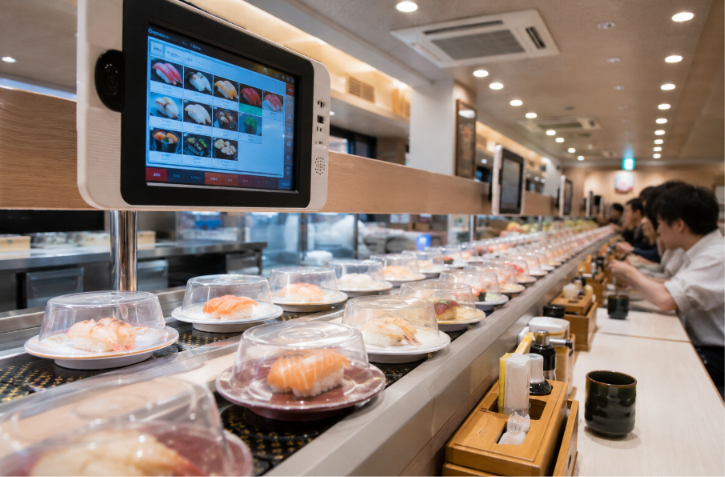
Conveyor-belt restaurants are the easiest first sushi meal: you can see what you are ordering and pay by plate. Standing sushi counters are even quicker and are aimed at people who want a fast meal. Both are good for trying several types without a big commitment.

Omakase and Ginza
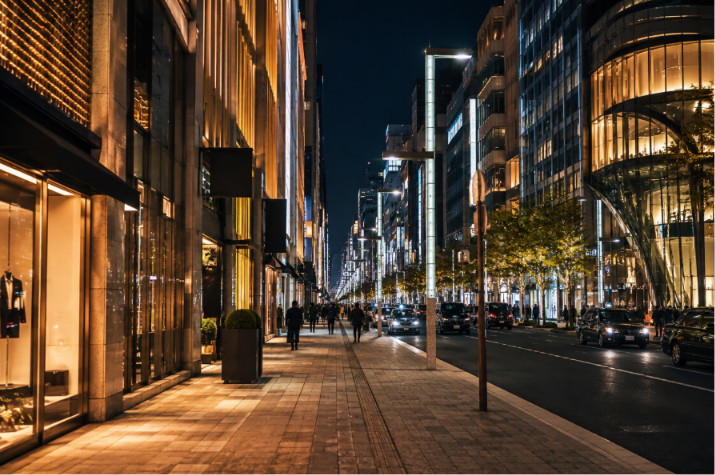
Omakase means leaving the menu to the chef. These counters are usually small, often need reservations, and cost much more than casual places. Ginza is a district known for upmarket dining, so it is a natural area to look if you want a formal experience. Book through the restaurant or your hotel concierge, and mention allergies when you reserve.
Where Sushi Clusters in Tokyo
Sushi is spread across the whole city, so it helps to think in neighbourhoods as well as styles. The table below draws on area descriptions in byFood’s Tokyo sushi guide and a roundup from MACHIYA INNS & HOTELS. It is a starting map, not a ranking, and Toyosu and Tsukiji are covered above.
| Area | What you tend to find |
|---|---|
| Ginza | Upmarket omakase counters. byFood lists several here, including chef-owned places run by sushi masters who trained at long-established Ginza restaurants |
| Shibuya | Small omakase counters, some with about ten seats, alongside casual options near Dogenzaka Street |
| Minato ward (Akasaka, Roppongi, Azabu-Juban, Nishiazabu) | A dense cluster of high-end counters. byFood describes Minato as a ward with no shortage of elite sushi chefs |
| Ebisu | Chef-driven counters within walking distance of the station, according to byFood |
| Ueno | MACHIYA describes the area around Shinobazu Pond as known for intimate, traditional sushi restaurants that have served locals for decades |
Names That Come Up Often in Other Guides
We have not eaten at these restaurants, and this is not a ranking. We list them because other guides mention them often and they show how different the options can be. Prices, hours and booking rules change, so check each restaurant’s own site before you go.
| Restaurant | Style | What byFood says |
|---|---|---|
| Sushi Dai | Early market-area counter | Famous for breakfast sushi from an early opening, with waits of an hour or more, and no longer takes reservations |
| Saito | Top-tier omakase | Called the highest-rated sushi restaurant in Tokyo, with reservations that can take months to secure |
| Nishiazabu Sushi Shin | Edo-style omakase | Among the first restaurants to receive a star in the Michelin Guide Tokyo, with a menu that changes constantly; listed from about US$153 per guest |
| Udatsu Sushi | Modern omakase in Nakameguro | Michelin-starred, with a chef who uses fresh herbs in his rolls; listed from about US$111 per guest |
| Sushi Umiji | Late-night omakase in Azabu-Juban | Open until 4:30 a.m., with an English menu; listed from about US$65 per guest |
The “from” prices above are the starting prices shown on byFood’s booking pages on October 9, 2026. The final cost depends on the course you choose and what you drink.
Prices: What to Expect
Prices vary widely and change, so treat any figure as a guide. At the time of its article, Tokyo Cheapo listed mid-range omakase sets near Toyosu at roughly ¥5,000 to ¥6,000 and seasonal sushi sets and seafood bowls from about ¥2,000. Conveyor-belt plates are much cheaper, and top-tier omakase is much more expensive. Check the restaurant’s current menu before you go.
For a sense of the upper range, byFood’s booking listings for Tokyo omakase counters showed starting prices from roughly US$52 to US$278 per guest at the time we checked. Those are “from” prices on a booking platform, so drinks and premium courses can raise the total. The gap between these and the casual options above is large, which is why it helps to settle your budget before you pick a style.
Ordering and Etiquette Basics
Omakase means “I’ll leave it up to you”, so the chef chooses the pieces based on freshness, season and sometimes your preferences, according to byFood. A few other points come up in the same guide:
- Eating with your hands is normal. byFood notes that sushi is traditionally meant to be enjoyed with the hands.
- Check before adding soy sauce. Chefs at Edo-style counters often brush each piece with a blend of sake, soy sauce and mirin (nikiri), so a piece may already be seasoned.
- Ask what you are eating. byFood suggests asking what is in each piece and adding extra pieces to an omakase if you want more, especially where an English menu is available.
- Photography rules differ. byFood notes that at least one Tokyo counter forbids photos, so ask first.
- Arrive on time. Many omakase counters described by byFood seat only seven to ten guests, so a late arrival affects the whole service.
Practical Tips
- Check closed days, especially for Toyosu (closed Wednesdays and Sundays, among other days).
- Arrive early at market restaurants, or choose an off-peak time.
- Book omakase counters in advance and confirm cancellation rules.
- Tell the restaurant about allergies and foods you avoid.
- Follow each venue’s rules on photography and queueing.
Frequently Asked Questions
What is the best sushi restaurant in Tokyo?
There is no single answer. Choose by style and budget: market restaurants for a morning meal, conveyor-belt for casual dining, omakase for a special occasion.
Is Toyosu or Tsukiji better for sushi?
Toyosu is the working wholesale market with restaurants inside, while the Tsukiji Outer Market has more shops and street-food options. Many visitors enjoy both.
Do I need to book sushi in Tokyo?
For omakase counters, usually yes. Conveyor-belt and standing places generally do not take bookings. Check each venue.
Is Toyosu open every day?
No. It is closed on Wednesdays, Sundays, holidays and irregular days, according to GO TOKYO. Check the official calendar before you go.
Can I eat sushi cheaply in Tokyo?
Yes. Conveyor-belt and standing sushi are the lower-priced options.
How much does omakase cost in Tokyo?
Prices vary widely. byFood’s booking listings showed starting prices from about US$52 to about US$278 per guest when we checked on October 9, 2026, depending on the restaurant and course. Check the restaurant’s own page for current prices and course options.
Can I find sushi late at night in Tokyo?
In some places, yes. byFood describes an Azabu-Juban omakase counter that stays open until 4:30 a.m. Opening hours change, so confirm with the restaurant before you go.
Is it okay to eat sushi with my hands?
Yes. byFood notes that sushi is traditionally meant to be enjoyed with the hands, and chopsticks are also common. Follow any guidance the chef or staff give you.
Which neighbourhoods should I look at for omakase?
Ginza, Shibuya, Ebisu and the Minato ward areas of Akasaka, Roppongi, Azabu-Juban and Nishiazabu come up repeatedly in byFood’s guide. MACHIYA also points to Ueno for traditional counters.
Sources and Last Check
Facts on this page were checked against the sources below on October 9, 2026. Prices, opening hours and rules can change, so confirm with the operator before you go. Images on this page are illustrative and are not photos from a specific visit.
