
Living in Tokyo costs a single person roughly ¥235,000 to ¥380,000 a month once rent is included, and rent is the biggest part. A 2026 estimate puts a lean budget at about ¥235,500, a comfortable one at about ¥301,600 and a premium one at about ¥382,000 for a one-bedroom. Your own number depends mostly on the ward you choose.
This guide pulls together published 2026 figures for rent, move-in costs and monthly bills. They come from commercial and housing-agent sites, not official statistics, so treat them as ranges and check current listings. Sources are listed at the end.
Table of Contents
Rent in Tokyo
| Home type | Typical monthly rent | Source note |
|---|---|---|
| Studio under 30 m², 23 wards (average) | ¥111,922 (March 2026) | Reported as a record high, up more than ¥12,000 on the year |
| One-bedroom, central wards (Shibuya, Minato) | ¥150,000–¥250,000 | Housing-agent estimate |
| One-bedroom, residential areas | ¥80,000–¥130,000 | Housing-agent estimate |
| Share house (private room) | ¥50,000–¥80,000 | Housing-agent estimate |
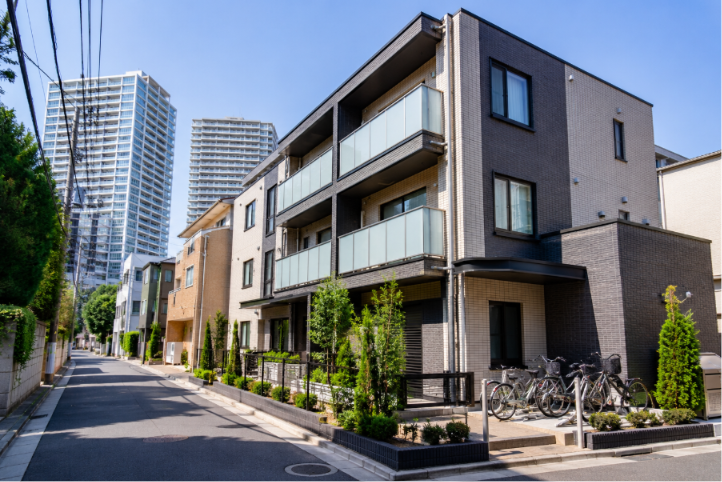
Moving outside the centre cuts costs. One 2026 guide says living on Tokyo’s outskirts or in nearby cities can lower your total living costs by 20–30% compared with central Tokyo.
Which Ward You Choose Matters Most
Tokyo’s ward system drives the price more than anything else. One 2026 expat guide calls Minato, Shibuya and Shinjuku the “Expat Golden Triangle”, the areas with the strongest English access and the highest rents. Living inside the 23 wards along the JR Yamanote Line, the circular line that links the central hubs, is described as especially expensive.
Averages depend on how a source counts, so use these figures as a guide to scale rather than a quote:
| Place | Figure | Source note |
|---|---|---|
| Tokyo average rent | About ¥87,000 a month | Resident, against a national average of about ¥59,700 |
| Osaka overall living costs | About 85% of Tokyo | Resident |
| Nagoya single-person spending | About ¥155,000–¥160,000 a month | Resident |
| Outer Tokyo or nearby cities | 20–30% lower than central Tokyo | 2026 housing guide |
If you are choosing between a central one-bedroom and a larger place further out, add the commuter pass to the comparison. A longer commute usually costs ¥8,000–¥15,000 a month, which is small next to the rent gap.
Move-In Costs
Upfront costs are a shock for newcomers. Published guides put them at roughly three to six months of rent in total. They bundle a deposit, key money (reikin), agent fees and, in many cases, a guarantor company fee. One guide gives the guarantor company fee as 50% to 100% of one month’s rent and the agent fee as about one month’s rent plus consumption tax.
To put that in yen, one 2026 expat guide suggests having ¥300,000–¥500,000 ready for a central apartment. Share houses are usually the cheapest way to start, because the upfront costs are much lower, and some furnished apartments trade a higher monthly rent for fewer move-in fees. Ask any agent which of the charges above are negotiable before you sign.
Monthly Costs for One Person
| Item | Typical monthly cost |
|---|---|
| Groceries | ¥28,000–¥50,000 |
| Utilities (electricity, gas, water) | ¥10,000–¥15,000 |
| Mobile phone | ¥3,000–¥8,000 |
| Internet | ¥4,000–¥6,000 |
| Commuter pass | ¥10,000–¥15,000, often reimbursed by employers |
| Health insurance | About ¥20,000, with the employer covering half for employees |
| Dining out | ¥30,000–¥60,000 |

Everyday prices from one 2026 guide: a lunch set costs ¥900–¥1,500 and a bowl of ramen or gyudon ¥600–¥1,200. A 24-hour Tokyo subway ticket costs ¥800.
Food is where Tokyo budgets differ most. Tokyo International Meetup puts a cook-at-home and convenience-store pattern at ¥25,000–¥35,000 a month and a comfortable pattern with regular dining out at ¥60,000–¥100,000, while one expat guide suggests a single person budget ¥45,000–¥60,000 for groceries alone. That spread is why the ranges in the table above are wide: guides assume different habits, and your own cooking routine decides where you land.
Three Sample Monthly Budgets
| Lean | Comfortable | Premium | |
|---|---|---|---|
| Rent (one-bedroom) | ¥170,000 | ¥227,500 | ¥295,000 |
| Groceries | ¥28,000 | ¥33,600 | ¥42,000 |
| Transport | ¥11,000 | ¥11,000 | ¥11,000 |
| Total monthly expenses | ¥235,500 | ¥301,600 | ¥382,000 |
The totals above also include utilities and dining out. For a household, one 2026 guide estimates that a typical Tokyo household spends about ¥380,000–¥420,000 a month, with groceries for a family of four around ¥72,000.
Insurance, Pension and Taxes
These deductions are easy to miss when you compare rent and groceries, but they are a fixed part of living in Tokyo. Residents on a long-term visa must enrol in either employer health insurance or National Health Insurance (kokumin kenko hoken), according to Migaku. Typical figures from 2026 guides:
| Item | Typical cost | Note |
|---|---|---|
| Employee health insurance | About 10% of salary | Split with the employer |
| National Health Insurance (self-employed) | ¥2,000–¥3,000 minimum, ¥10,000–¥30,000 or more for higher earners | Covers 70% of medical costs, so you pay 30% |
| National Pension | About ¥17,000 a month | Flat rate for the self-employed and others not in an employer scheme |
| Employee pension | About 9% of salary | Split with the employer |
| Child-rearing support contribution | About 0.23% of pay, or roughly ¥250–¥450 a month | New from April 2026 on health insurance premiums, according to BrightTax and Migaku |
| Consumption tax | 10% (8% for food eaten off-premises) | Prices in most shops already include it |
One expat guide estimates that national health insurance and local resident taxes together can take roughly 10% to 15% of declared income, depending on your visa status. Treat that as a planning figure and check your own situation with your employer or ward office.
How to Cut Your Tokyo Bill
Rent is the biggest lever, but it is not the only one. The most reliable savings in the 2026 guides are:
- Live outside the centre. Outer wards such as Adachi, Katsushika and Edogawa, or nearby cities, can cut total living costs by 20–30%
- Start in a share house. A private room costs ¥50,000–¥80,000 a month, and one guide quotes ¥45,000–¥75,000 including utilities
- Cook at home. A cook-at-home and convenience-store pattern keeps groceries near ¥25,000–¥35,000, while regular dining out pushes food spending to ¥60,000–¥100,000
- Choose a home near your work. Commuter passes run ¥8,000–¥15,000 a month, and many employers reimburse them
- Skip the car. Parking, insurance and taxes make owning a car in central Tokyo expensive, and the train network covers most trips
Tokyo as a Base for Outdoor Days
One reason to live in or near Tokyo is how much hiking sits within day-trip range. Our guides cover Mount Takao, Mount Mitake, Mount Odake and Mount Oyama, all reachable without a car. Hiking days are a cheap way to spend a weekend: the main costs are the train and cable car, not entry fees.
Tokyo Cost of Living FAQ
How much do I need to earn?
One 2026 estimate says a lean budget needs about ¥296,880 a month before tax, and a comfortable one about ¥385,258. These depend on tax and your housing.
Is Tokyo cheaper than other big cities?
One 2026 guide notes that Tokyo rent often comes in under London or New York, although apartments are smaller and move-in costs are high. A weak yen also changes the maths for people paid in other currencies.
Where can I rent for less?
Ward lists vary, but guides frequently mention outer wards such as Adachi, Katsushika and Edogawa as better value than the central wards.
How much money do I need before I move to Tokyo?
Plan for the first month’s rent plus move-in costs. One 2026 expat guide says to budget ¥300,000–¥500,000 upfront for a central apartment, which matches the three-to-six-months-of-rent range above. A share house usually lowers that figure sharply.
Can I live in Tokyo on ¥200,000 a month?
Yes, with choices. Tokyo International Meetup puts a budget lifestyle in outer Tokyo at ¥130,000–¥160,000 a month and a comfortable one at ¥200,000–¥280,000, while the lean budget in the table above is ¥235,500 for a one-bedroom. At ¥200,000 you are looking at a share house or a small apartment in an outer ward, cooking at home most nights.
Is health care expensive in Tokyo?
Not compared with many countries. Japan’s insurance covers 70% of most medical costs, so you pay 30% at the clinic, and monthly premiums depend on income and whether you are an employee. See the insurance section above for typical figures.
How does Tokyo compare with Osaka?
Resident estimates that overall living costs in Osaka are about 85% of Tokyo’s, and a single person in Nagoya spends roughly ¥155,000–¥160,000 a month. Rent is the main reason: Tokyo rent averages about ¥87,000 in that guide, against a national average of about ¥59,700.
Sources and Last Check
This guide is compiled from published 2026 cost estimates, not from our own housing search. We last checked these sources on October 9, 2026. Housing and price data change quickly, so use current listings for your own budget. Images are illustrations.
- Affordwhere: Tokyo cost of living 2026
- Affordwhere: salary needed in Tokyo
- Weave Living: Tokyo vs Seoul, March 2026 studio rents
- Japaholic: How expensive is it to live in Tokyo
- e-housing: living in Japan in 2026
- e-housing: Tokyo family cost of living 2026
- Cost of living in Tokyo for expats in 2026
- Tokyo International Meetup: Cost of living in Tokyo 2026
- Resident: How much you need to live in Japan in 2026
- Migaku: Cost of living in Japan for a family of four
- BrightTax: What Americans living in Japan need to know in 2026
- MileAsia: Japan money guide 2026
- A Way Abroad: Tokyo cost of living 2026
