
The most reliable way to see geisha in Kyoto is at a performance, not by waiting in the street. Kyoto’s geisha are called geiko and their apprentices maiko, and they work in five historic districts. They are professionals on their way to private engagements, so spotting one on the street is luck, and chasing them is rude and increasingly punished.
This guide covers the seasonal dances, the year-round Gion Corner show, the photography rules in Gion and what to do instead. Dates are for 2026 unless stated, taken from the sources at the end, so confirm them with the theatres before you book.
Table of Contents
- Geisha, Geiko and Maiko: What the Words Mean
- How to Tell a Maiko from a Geiko
- Seasonal Dances: The Best Way to See Geiko and Maiko
- Gion Corner: A Show Every Day
- Dinner With a Maiko or Geiko (Ozashiki)
- Which Experience Fits You?
- Photography and Etiquette in Gion
- Pontocho Alley
- Geisha Culture Beyond Kyoto
- Geisha in Kyoto FAQ
- Sources and Last Check
Geisha, Geiko and Maiko: What the Words Mean
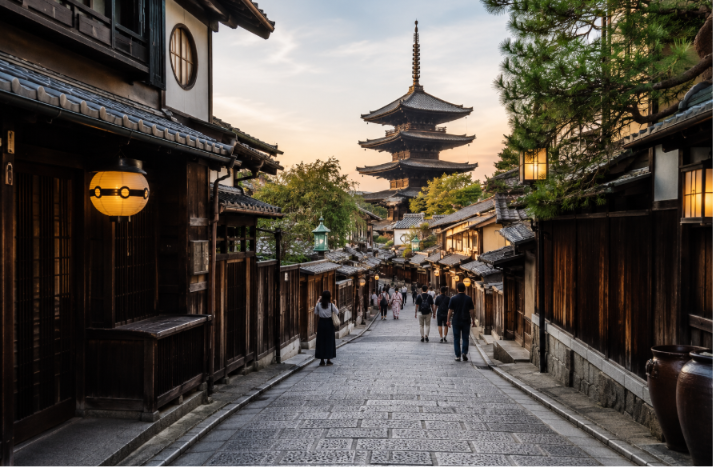
Outside Kyoto the word is geisha. In Kyoto, a fully qualified geisha is a geiko, and an apprentice is a maiko. They work in districts called hanamachi. Kyoto has five: Gion Kobu, Gion Higashi, Pontocho, Miyagawacho and Kamishichiken, according to a 2026 Kyoto guide.
How to Tell a Maiko from a Geiko
The two look different, which helps you read what you are seeing in Gion. According to the booking page for the Fusanoya teahouse, a maiko, the apprentice, wears a more elaborate hairstyle, a colourful kimono with long sleeves and a long, decorative obi sash. A geiko projects a more mature, refined appearance, with an understated kimono and the white face makeup with red and black accents that has become iconic.
One caution: makeover studios dress visitors in maiko-style kimono and hairstyles, so not everyone in a bright kimono on Hanamikoji is a working maiko. Treat any real sighting as luck, and respect that they are on their way to work.
Seasonal Dances: The Best Way to See Geiko and Maiko
| Performance | District | 2026 dates | Notes |
|---|---|---|---|
| Kitano Odori | Kamishichiken | March 20 – April 2 | Held by the oldest of the five districts |
| Miyako Odori | Gion Kobu | April 1–30 | About one hour, eight scenes. Shows at 12:30, 14:30 and 16:30. No photos during the show |
| Kyo Odori | Miyagawacho | April 4–19 | No performance on April 13 |
| Kamogawa Odori | Pontocho | May 5–22 | At the Pontocho Kaburenjo theatre by the river. Tickets are exchanged at the ticket office on the day |
| Gion Odori | Gion Higashi | Early November, typically about November 1–10 | The main autumn performance. Check the dates each year |
Kyoto’s official tourism site lists the spring dances (Kitano, Miyako, Kyo and Kamogawa Odori). The autumn Gion Odori dates come from a 2026 guide and are usually fixed to the first ten days of November. Reserve through each theatre’s official site.
Gion Corner: A Show Every Day
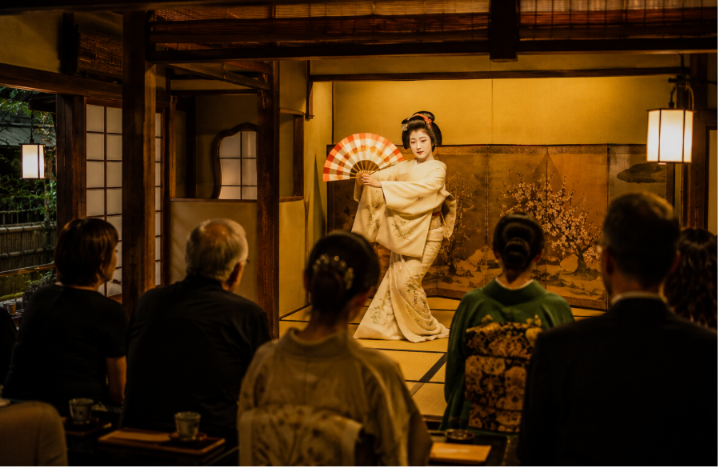
Gion Corner, inside the Gion Kobu Kaburenjo theatre on Hanamikoji Street, shows traditional performing arts such as kyomai dance. One 2026 guide says the shows run daily at 6 p.m. or 7 p.m. It is a good option outside the spring and autumn dance seasons, but check times and ticket prices on its official page before you go.
Dinner With a Maiko or Geiko (Ozashiki)
An ozashiki is a banquet in a private room of a teahouse (ochaya), where maiko and geiko entertain with dance, music and games. It has traditionally been closed to newcomers. Have a Good Holiday explains the rule known as ichigen-san okotowari, under which first-time visitors are not accepted without a personal introduction. Tour companies now arrange versions for international guests, so check what each listing actually offers.
What you typically get, according to 2026 listings, is a multi-course Japanese dinner with drinks, a dance by a maiko, ozashiki games such as konpira fune-fune, a rhythmic game set to music where losing carries a penalty, and conversation with a guide interpreting. Options and prices differ widely:
| Option | What it includes | Length | Price in 2026 listings |
|---|---|---|---|
| Gion walk plus maiko show (Ken’s Tours Kyoto on Expedia) | Guided walk through Gion, then a 45-minute meeting and dance with a maiko, with a tea break, lunch or dinner | About 3 to 3.5 hours | About US$131 with tea, US$142 with lunch and US$205 with dinner |
| Gion Maikoya dinner show | Dinner and a geiko or maiko performance in a traditional room near Hanamikoji Street | About 90 minutes | Check the operator’s page |
| Fusanoya teahouse dinner (JPN Easy) | Dinner at a historic Gion ochaya with a maiko or geiko and up to three drinks | 2 hours | Listed from ¥129,470, varying with group size |
| Private guided Gion tour with kaiseki (Expedia) | Guided Gion walk, kaiseki dinner and drinks with a maiko or geiko | About 4 hours | About US$878 per adult |
Expect some etiquette. One listing says guests are asked, per local custom, to buy one drink for the maiko or geiko, and that only one is arranged and you cannot choose which. Another notes that the maiko leaves about 15 minutes before the experience ends.
Which Experience Fits You?
The right choice depends on what you want from the evening:
| If you want to… | Best option | Notes |
|---|---|---|
| See geiko and maiko dance on stage | A seasonal dance in spring or early November | Reserve through the theatre. Dates are in the table above |
| See traditional performing arts on any night | Gion Corner | Shows run daily at 6 p.m. or 7 p.m., according to one 2026 guide |
| Talk, play games and have a meal | An ozashiki dinner through an operator | Check what is included, and whether an interpreter is provided |
| Feel the atmosphere without a ticket | Walk Hanamikoji, Shirakawa or Pontocho at dusk | Stay on the main streets and leave private alleys alone |
| Try the look yourself | A maiko makeover studio | Lets you enjoy the look without bothering working geiko |
Photography and Etiquette in Gion
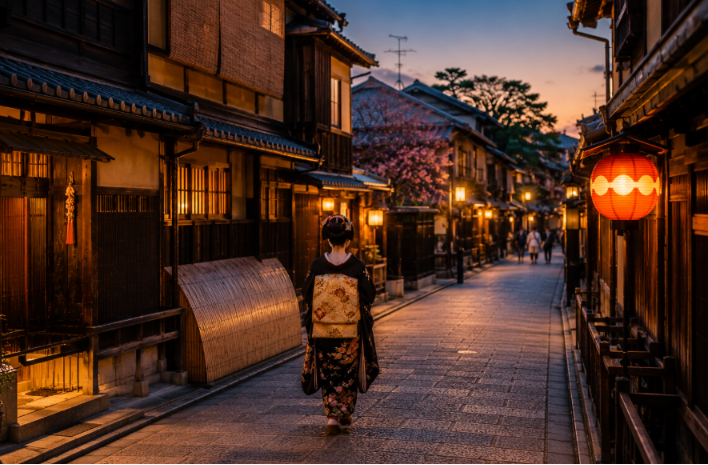
Gion’s private alleys have signs banning photography and entry by tourists, and the signs give a fine of up to ¥10,000. The ban was introduced by a residents’ and shop owners’ association and is enforced with signs and video cameras. You can still take photos on the main streets, such as Hanamikoji, Shirakawa and Sannenzaka.
- Do not follow a geiko or maiko, block her path or ask her to pose
- Stay out of the private side alleys marked with signs
- Do not photograph private property or peer into teahouses
- Kyoto’s official visitor guidelines say photography is only permitted in designated areas
Pontocho Alley
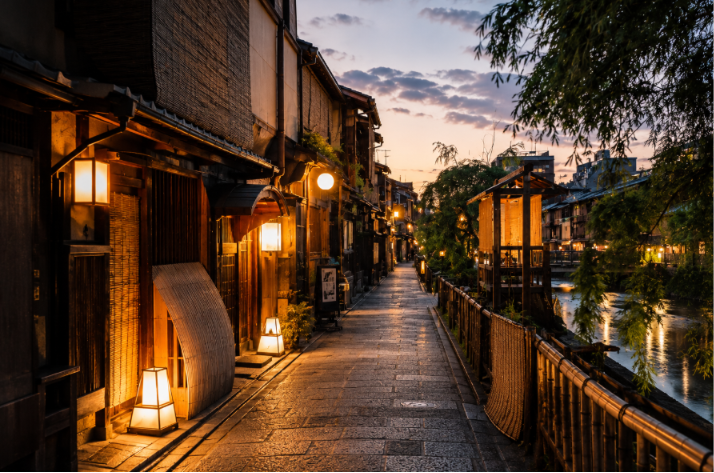
Pontocho is a narrow lantern-lit alley running beside the Kamogawa River, lined with restaurants. It is the home of the May Kamogawa Odori, and it is a pleasant place for dinner in the evening. You are not guaranteed to see a geiko there.
Geisha Culture Beyond Kyoto
- Asakusa, Tokyo: GO TOKYO, the Tokyo Metropolitan Government’s travel guide, lists an Asakusa geisha Ozashiki Odori event for spring and summer 2026
- Kanazawa: the Kanazawa Odori ran on September 19–20, 2026
Geisha in Kyoto FAQ
Can I see geisha just by walking around Gion?
Sometimes, around dusk on Hanamikoji Street, but there is no guarantee, and you should treat any sighting as private. A performance or Gion Corner is far more reliable.
Is the ¥10,000 fine real?
The signs say the fine is up to ¥10,000. It applies on the private alleys, not the main streets.
Can I dress up as a maiko?
Several Kyoto studios offer geisha or maiko makeover experiences. This is a way to try the look without bothering working geiko.
What is the best time of year to see geisha dances?
Spring is the busiest season, with Kitano Odori from late March, then Miyako Odori and Kyo Odori in April and Kamogawa Odori in May. Gion Odori follows in early November. Outside those windows, Gion Corner runs daily and ozashiki dinners can be booked through operators.
How much does a dinner with a maiko cost?
It varies widely. In 2026 listings, a Gion walk with a maiko show was priced at roughly US$131–US$205 on Expedia depending on whether it included tea, lunch or dinner, a private guided tour with kaiseki dinner was about US$878, and one Gion teahouse dinner was listed from ¥129,470. Check what the price includes, such as drinks and an interpreter.
What does ichigen-san okotowari mean?
It is the traditional rule that first-time visitors are not accepted at an ochaya, or teahouse, without a personal introduction. Tour operators exist because most visitors have no such introduction.
Can I take photos of a maiko?
On Gion’s main streets, yes, but never follow, block or pose a working maiko or geiko, and stay out of the private alleys marked with signs. Some booked experiences allow photos with the maiko, according to Last Minute Japan, so ask the operator and the maiko before taking any.
Sources and Last Check
We compiled this guide from published schedules and guides, not from our own visit. We last checked these sources on October 9, 2026. Dates and prices change, so confirm with the theatres before you book. Images are illustrations.
- Kyoto Travel: Maiko spring dances 2026
- JapanTravel: Miyako Odori 2026
- Nomado Travel: Geisha in Kyoto, 2026 guide
- Watabi: Seeing maiko in Kyoto, 2026
- Time Out: Gion bans photos on private streets
- Japan Royal Service: modern geisha, Kyoto, Asakusa and Kanazawa
- Expedia: Gion cultural walk and geisha show
- Expedia: Private Gion tour and maiko or geisha dinner
- JPN Easy: Dinner and maiko or geisha experience at Fusanoya
- Last Minute Japan: Dinner with an authentic maiko in Kyoto
- Have a Good Holiday: Private maiko and geiko ozashiki experience
- Gion Maikoya: Geisha dinner show
