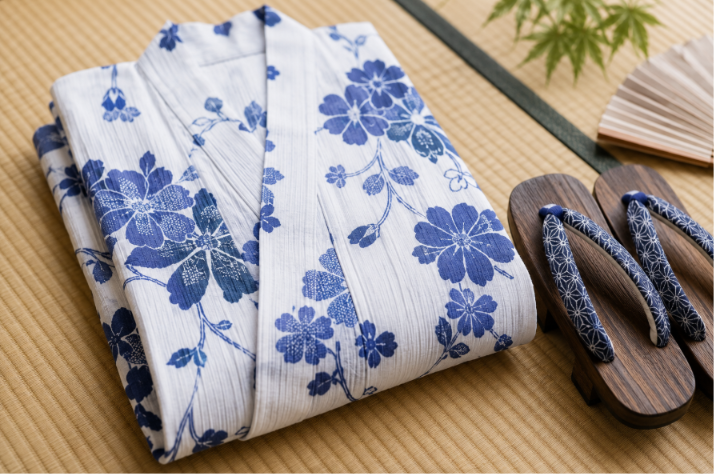
A yukata is the casual, summer version of Japanese dress. A kimono, in the narrower sense most visitors mean, is the more formal garment worn for ceremonies and special occasions. The two look similar at a glance, but they differ in fabric, layers, the obi (belt) and how much effort it takes to put them on.
This guide explains the differences in plain terms and helps you choose which to wear if you are a visitor. For rental prices, see our separate kimono cost guide.
Table of Contents
The Short Answer
Yukata is a casual summer garment, usually made of cotton, hemp or polyester, worn to festivals and fireworks displays. Kimono covers a wider range of garments in silk, hemp, polyester or wool, and is worn for formal events such as weddings, coming-of-age ceremonies and graduations.
Kimono vs Yukata at a Glance
| Kimono | Yukata | |
|---|---|---|
| Typical occasions | Weddings, coming-of-age ceremonies, graduations, tea ceremonies | Summer festivals, fireworks, casual outings |
| Season | Varies: hemp for summer kimono, wool for winter | Summer |
| Fabric | Silk (the finest), hemp, polyester or wool | Cotton, hemp or polyester |
| Underlayers | Needs a hadajuban and a nagajuban; rarely worn on bare skin | Traditionally worn on bare skin; modern wearers often add a light underlayer |
| Obi | Wider fukuro obi or Nagoya obi; pattern and colour matter more | Narrower han-haba obi |
| Footwear | Zori with tabi socks | Geta, usually without socks |
| Dressing effort | More steps and often a dresser | Quick and simple |
This comparison follows the breakdown published by Fun! Japan. Exact customs vary by region and by the formality of the event.
When People Wear Each One
Yukata are the everyday summer choice. You will see them at fireworks festivals and summer matsuri, and many Japanese inns provide them for guests to wear around the property. Kimono are reserved for occasions that call for formality, and the right type, colour and obi depend on the event and the wearer.
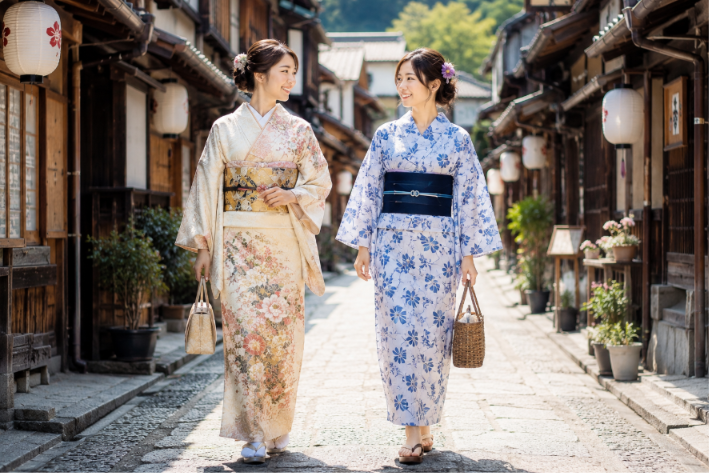
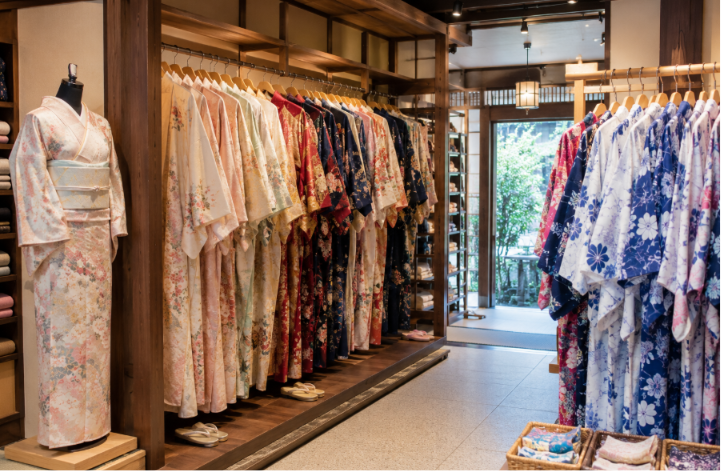
Visitors can also rent either garment for sightseeing in places such as Kyoto and Asakusa. Rental shops usually set out the options and help with dressing, but confirm what is included before you book.
Layers, Obi and Accessories
The biggest practical difference is layering. A kimono is worn over a hadajuban (a light undershirt) and a nagajuban (a full-length under-robe), so there are more pieces to tie and adjust. A yukata is simpler: traditionally it is worn directly on the skin, though many people today add a thin layer underneath.
- Obi: a yukata uses a narrower belt, often tied in a decorative bow. A kimono uses a wider obi where the pattern and colour are part of the outfit.
- Footwear: geta (wooden sandals) go with a yukata. Zori and tabi socks go with a kimono.
- Hair and accessories: keep it modest with a yukata. Kimono can carry more elaborate ornaments.
- Wrap direction: wrap the left side over the right. The reverse is used for the deceased, so avoid it.
Which Should a Visitor Choose?
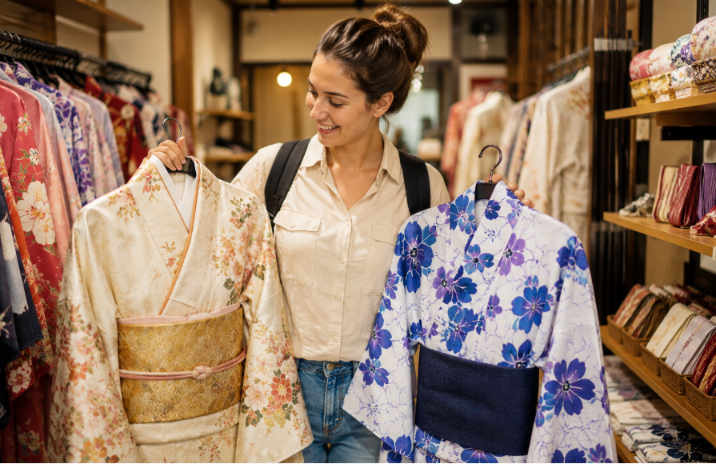
Choose a yukata if you are visiting in summer, want something lighter and quicker to put on, or are going to a festival or fireworks display. Choose a kimono if you want a more formal look for photographs, are visiting outside summer, or are happy to spend more time getting dressed.
- Summer heat: a cotton yukata is far more comfortable than a layered silk kimono.
- Time: allow longer for a kimono fitting than for a yukata.
- Walking: both restrict your stride, so plan a short, relaxed route.
- Weather: check the forecast, since rain affects rental plans and footwear.
Wearing Them Respectfully
Wearing a kimono or yukata as a visitor is generally welcomed, especially at rental shops set up for it. Keep the wrap direction correct, handle the garment gently, and avoid sitting or crouching in ways that strain the fabric. If you are unsure about a particular event, ask your rental shop or host.
Frequently Asked Questions
Is a yukata a kimono?
In the broad sense of the word, a yukata is a type of traditional Japanese garment, but in everyday usage people distinguish them: yukata for casual summer wear, kimono for formal or seasonal dress.
Can I wear a yukata in winter?
It is a summer garment, so it is not the usual choice in cold weather. A kimono, which comes in seasonal fabrics such as wool, is the better option outside summer.
Which is easier to put on?
A yukata, because it needs fewer layers and a simpler obi. A kimono needs a hadajuban, a nagajuban and a wider obi, so dressing takes longer.
Do I need socks?
A yukata is normally worn with geta and without socks. A kimono is worn with tabi socks and zori.
Which is cheaper?
Yukata are generally the lower-priced option, but rental and purchase prices vary widely. See our kimono cost guide for ranges, and check the shop price list for the current figure.
Sources and Last Check
Facts on this page were checked against the sources below on October 9, 2026. Prices, opening hours and rules can change, so confirm with the operator before you go. Images on this page are illustrative and are not photos from a specific visit.
