
For a first visit, plan at least three days in Tokyo. Two days is possible if you are in a hurry, and five to seven days gives you room to slow down, follow your interests or add a day trip. That matches the guidance in the Rough Guides itinerary on how many days Tokyo needs.
Below, we break down what fits into each length of stay, how to pick a base, and how to avoid overpacking your days.
Table of Contents
- The Short Answer
- If You Only Have Two Days
- Three Days: The Best Minimum
- Four Days: Slow Down
- Five to Seven Days: Day Trips and Deep Dives
- Day Trips Worth the Time
- Planning Tips
- Where to Base Yourself
- Combining Tokyo with the Rest of Japan
- How Tokyo Fits into a Longer Japan Trip
- Frequently Asked Questions
- Sources and Last Check
The Short Answer
| Time | What it suits |
|---|---|
| 2 days | Top highlights on busy, walking-heavy days |
| 3 days | The recommended minimum: highlights plus a few distinctive neighbourhoods |
| 4 days | A slower pace with quieter local areas |
| 5 to 7 days | Time for day trips or a deeper focus on food, anime or shopping |
If You Only Have Two Days
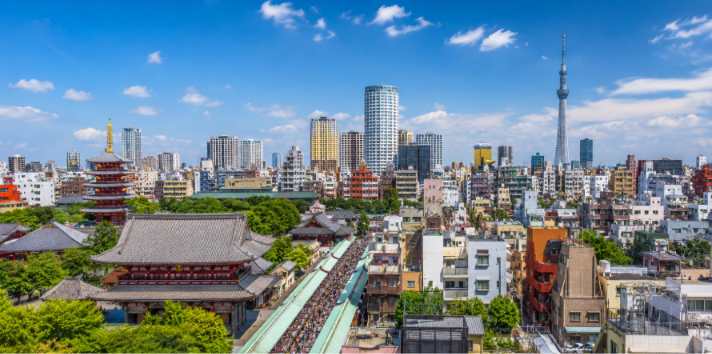
Two days covers the main highlights, with a lot of walking. The Rough Guides sample plan includes Tsukiji Outer Market, Hamarikyu Gardens, Senso-ji, Tokyo Skytree, Meiji Shrine, Harajuku, Shibuya and Ebisu. It works, but you will see a lot from the outside and little in depth.
Three Days: The Best Minimum
A third day adds creative neighbourhoods and art. Rough Guides suggests Daikanyama, Shimokitazawa, teamLab Planets in Toyosu and Golden Gai in Shinjuku. That gives a better balance of famous sights and character.
Four Days: Slow Down
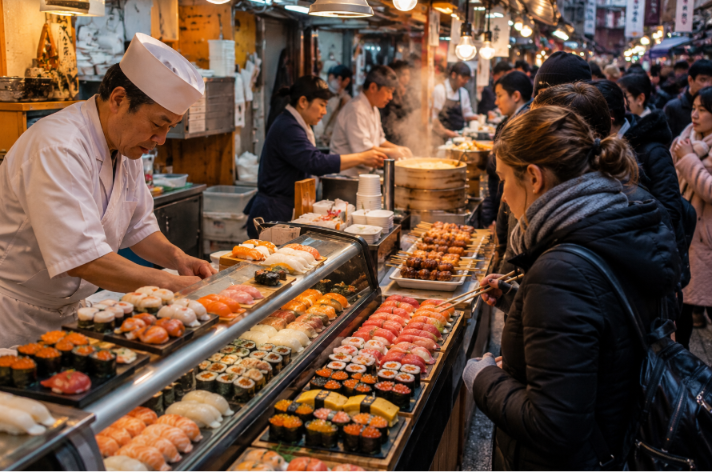
Four days lets you add quieter local areas, such as Yanaka and Kiyosumi Garden, and a long dinner. You can also leave an afternoon open for rest or shopping.

Five to Seven Days: Day Trips and Deep Dives
With five to seven days, you can see the major sights without rushing and leave room for a focus such as anime in Akihabara or food. It is also enough time to add a day trip. Popular options from Tokyo include Kamakura, Nikko and Hakone, but check current travel times and opening hours before you plan.
Day Trips Worth the Time
Day trips are what turn a longer Tokyo stay into good value, and they change how many days you need. The same handful of places appear in nearly every published itinerary:
| Destination | Best for | Good to know |
|---|---|---|
| Nikko | UNESCO World Heritage shrines and temples, waterfalls and mountain scenery | Trains run north from Asakusa. Wapiti Travel suggests two days and a night in a ryokan for a slower pace |
| Kamakura | A coastal town with temples, shrines and the Great Buddha | Reached south from Tokyo Station. JW Web Magazine calls it the “Kyoto of the East” and notes it is near a beach |
| Hakone | Hot springs, a Lake Ashi cruise and the Hakone Ropeway over Owakudani Valley | About 1.5 to 2 hours from Tokyo, according to Trip.com. Fuji views need a clear day |
| Fuji Five Lakes (Kawaguchiko) | Mount Fuji views and Chureito Pagoda | Lake Kawaguchi is the hub, and the weather decides what you see |
| Mount Takao | An easy hike near the city | Explorer Tom lists it among the best day trips from Tokyo |
| Yokohama or Kawagoe | A lighter half-day trip | Both appear in guides as smaller options that fit around a city day |
Treat a Fuji day trip as a viewing trip. Japan Starts Here cautions that some versions of a Fuji day trip range from reckless to downright dangerous, and our July guide covers the official climbing season if you want the summit.
Planning Tips
- Pick a base near a major line, such as the Yamanote Line, to cut travel time.
- Group sights by area to avoid crossing the city repeatedly.
- Leave buffer time for jet lag, queues and weather.
- Check opening days. Some places close on specific weekdays.
- Do not expect to see everything: choose two or three priorities per day.
- Count arrival and departure days as half days, especially after a long-haul flight
- Check whether timed-entry attractions such as teamLab Planets need advance tickets
- Group day trips by direction, such as north for Nikko and south for Kamakura and Hakone, so you are not backtracking

Where to Base Yourself
Tokyo’s rail lines fan out from different hubs, so your base changes how easy day trips are. For most itineraries one base is enough, and these are the choices that come up in 2026 guides:
- Shinjuku: Wapiti Travel notes that Shinjuku Station has many direct connections, which makes it a convenient base for side trips
- Near Tokyo Station: Weblog the World says Kamakura trips head south from Tokyo Station, and it is also the Shinkansen hub for Kyoto and Osaka
- Asakusa: the same guide says trains to Nikko run north from Asakusa, and the area has Senso-ji
- Anywhere on the Yamanote Line: a base on this loop keeps transfers short, as noted in the planning tips above
Combining Tokyo with the Rest of Japan
Many first-time itineraries pair Tokyo with Kyoto and Osaka. If you are building a longer route, see our JR Pass guide and check whether a pass makes sense for your route before you buy.
How Tokyo Fits into a Longer Japan Trip
Most visitors do not spend their whole holiday in Tokyo. KimKim reports that most people spend 10 to 12 days in Japan in total, usually adding Kyoto, Osaka and Hakone. These patterns from published itineraries show how the Tokyo share changes:
| Total trip | Time in Tokyo | Typical pattern |
|---|---|---|
| 5 days, Tokyo only | 5 days | Two days in the city, two days of day trips such as Hakone, Fuji or Nikko, then a final city day |
| 10 days, Tokyo, Hakone and Kyoto | About 3 days | Three days in Tokyo, two nights in Hakone, then Kyoto |
| 9 days, Tokyo, Kyoto and Osaka | About 4 days | Tokyo plus Nikko and Kamakura day trips, then Hakone on the way west |
| 2 weeks | 4–5 days | Tokyo 4–5 days, Osaka about 2, and 1–2 days for Hakone, the Fuji area or Kanazawa |
If you are moving between cities, price your rail options first. Our money guide also covers how much cash to carry for day trips, since small towns and temples often do not take cards.
Frequently Asked Questions
Is three days enough for Tokyo?
It is enough to see the highlights and a few neighbourhoods. Rough Guides recommends at least three days for a first visit.
Is two days enough?
It is possible but rushed. You will mostly see the main sights quickly.
How many days should I spend if I want day trips?
Five to seven days gives room for the major sights plus one or two day trips.
Should I stay in one hotel?
For most itineraries a single base in Tokyo is practical. Choose one near a major train line.
What is the best time to visit?
Spring and autumn are popular for mild weather, but Tokyo can be visited year-round. Check the forecast for your dates.
How many days do I need for Tokyo plus day trips?
Explorer Tom suggests six to seven days if you want to add day trips, while Japan Starts Here offers a rule of thumb: five nights, or four full days, gives you day trips to two destinations plus about 48 hours in the city itself.
Is one week in Tokyo too long?
Not if you enjoy big cities or want day trips, according to Explorer Tom. If you tire of cities quickly, four or five days in Tokyo plus a night in Hakone or Nikko is a good compromise.
Should I visit Nikko or Kamakura?
Choose by interest. Nikko offers UNESCO World Heritage shrines and temples, waterfalls and mountain scenery. Kamakura is a coastal town with temples and the Great Buddha, and it is near a beach, which suits summer. If you have only one spare day, pick one rather than rushing both.
Is a Mount Fuji day trip worth it?
For views, yes, if the weather is clear. Hakone and Lake Kawaguchi both give classic Fuji views, but a cloudy day can hide the mountain completely, so keep your schedule flexible. A summit climb is a different undertaking: see our July guide for the official climbing season dates.
How many days should Tokyo get on a two-week Japan trip?
Explorer Tom suggests four to five days in Tokyo, about two in Osaka and one or two for a stop such as Hakone, the Fuji area or Kanazawa. KimKim notes that most visitors spend 10 to 12 days in Japan overall.
Sources and Last Check
Facts on this page were checked against the sources below on October 9, 2026. Prices, opening hours and rules can change, so confirm with the operator before you go. Images on this page are illustrative and are not photos from a specific visit.
- Rough Guides: How many days do you need in Tokyo?
- KimKim: Tokyo best itinerary ideas
- Explorer Tom: How many days in Tokyo
- Trip.com: Perfect 5-day Tokyo itinerary 2026
- Japan Starts Here: Day trips from Tokyo
- Weblog the World: Day trips from Tokyo
- Wapiti Travel: Japan 5-day itinerary
- JW Web Magazine: 10 days in Tokyo and eastern Japan
