
Ask a Japanese person what they miss most about winter at home, and a surprising number won’t say snow or hot springs. They’ll say the kotatsu — the low heated table that anchors the living room from roughly November to March. Slide your legs under the blanket, feel the warmth rise around your knees, and within minutes you understand why an entire nation plans its winter evenings around a piece of furniture.
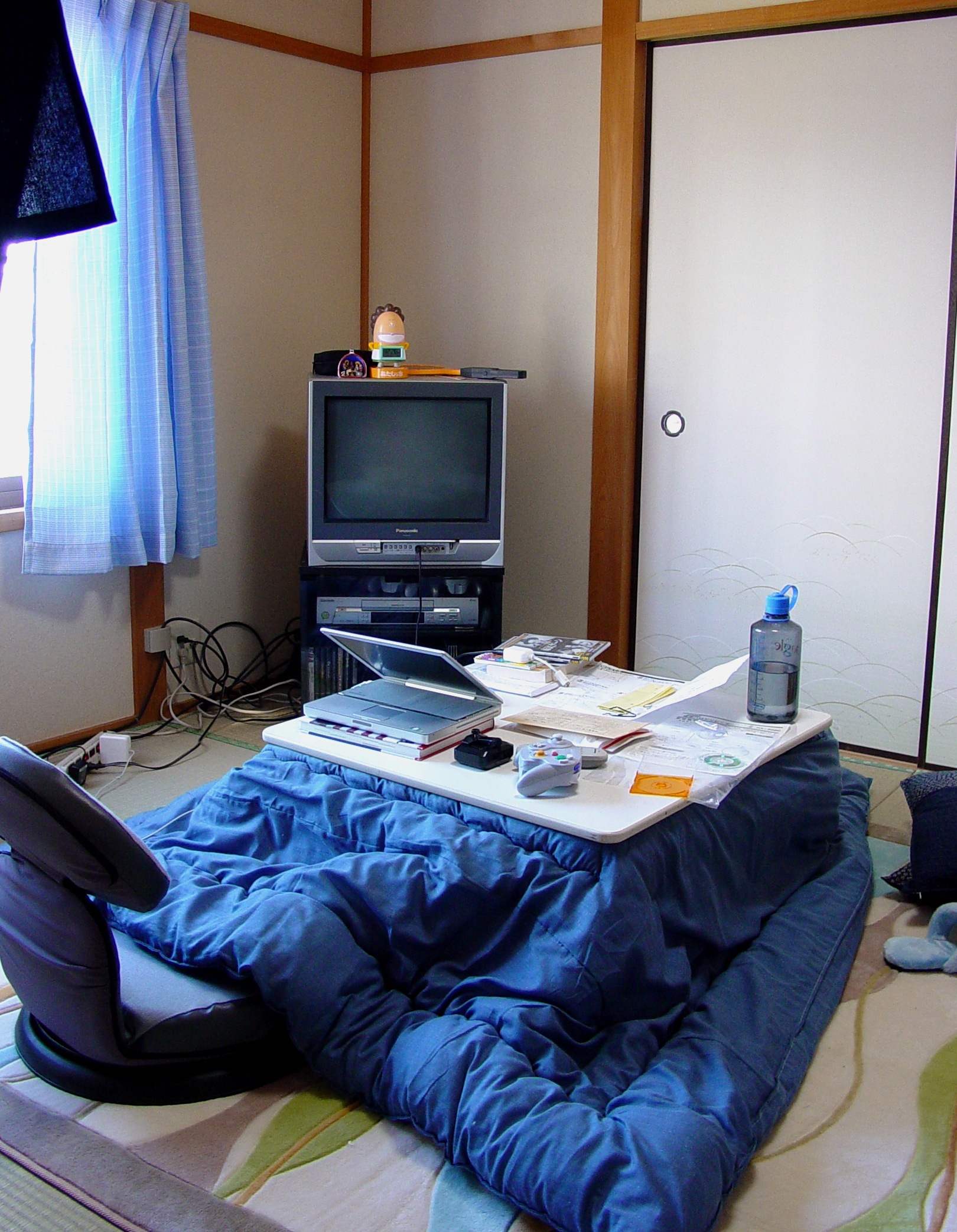
So what is a kotatsu, exactly? At its simplest, it’s a low wooden table with a heater fixed underneath and a thick blanket (futon) draped over the frame, topped with a tabletop. You sit on the floor, tuck your legs under the blanket, and the trapped warm air heats you from the knees down. It warms the person, not the room — which is precisely why it works so well in Japan’s traditionally draughty wooden houses.
This is a cultural guide, not a hiking post — but if you’re travelling in Japan in winter, the kotatsu is one of those small everyday things that tells you more about the country than any temple. Here’s everything worth knowing: how it works, the two main types, how families actually use it, safety, where you can try one as a visitor, and what to know if you want to buy one.
Table of Contents
- Quick facts
- How a kotatsu actually works
- A short history: from open hearth to electric blanket-table
- The two main types: oki-gotatsu vs hori-gotatsu
- How Japanese families actually use it
- Safety: what you need to know
- Where travellers can experience a kotatsu
- Buying a kotatsu: practical tips
- Our tips
- How We Would Fit a Kotatsu Into a Winter Trip
- FAQs
- The bottom line
Quick facts
| What it is | A low table with an under-mounted heater and draped blanket |
| Components | Table frame, electric heater, futon (blanket), tabletop |
| Origins | 14th-century Japan, evolving from the irori open hearth |
| Main types | Oki-gotatsu (floor frame) and hori-gotatsu (sunken pit) |
| Season | Roughly November to March |
| Typical price | Varies by size and heater; check current retailer listings |
| Voltage | 100V — important if you plan to take one home |
How a kotatsu actually works
The design is brilliantly simple. A low table frame — usually 30 to 40 cm high — has an electric heating element mounted on its underside. A heavy futon is draped over the frame like a tablecloth, and a separate tabletop rests on top, pinning the blanket in place. You sit on floor cushions (zabuton), slide your legs into the warm cavity, and the blanket seals the heat around your lower body.
Because the warmth is trapped in a small space, a kotatsu uses far less energy than heating a whole room. The blanket does most of the work: lift it and the heat escapes instantly, which is why kotatsu veterans develop the habit of slipping in and out with minimal blanket-lifting — a small skill, but a real one.
Modern heaters are flat electric panels with thermostats and, on most current models, an automatic shut-off timer. You set the temperature with a dial or remote, and the unit cycles on and off to hold it. That’s the whole technology — no fans, no noise, no moving parts.
A short history: from open hearth to electric blanket-table
The kotatsu’s roots go back to 14th-century Japan and the irori, the sunken open hearth found in traditional farmhouses. Families gathered around the irori for heat, cooking and light, sitting on its wooden edge with their legs dangling over the warmth. The first kotatsu were essentially portable versions of that idea: a wooden frame placed over a charcoal brazier, covered with a quilt to trap the heat.
Over the centuries the design split and refined. The charcoal version survived for a long time — and in some traditional inns you can still find them — but the real revolution came with electrification in the 20th century. Electric kotatsu heaters replaced the brazier, making the table safe, odourless and thermostat-controlled. By the postwar decades the electric kotatsu had become what it is today: standard winter furniture in millions of Japanese homes.
The two main types: oki-gotatsu vs hori-gotatsu
Oki-gotatsu (置き炬燵)
This is the kotatsu most people picture: a freestanding low frame that sits directly on the floor or tatami. You sit on cushions around it with your legs stretched out underneath. It’s portable, affordable and the type sold in every electronics and furniture store in Japan. When spring comes, many families remove the futon and use it as an ordinary low table.
Hori-gotatsu (掘り炬燵)
The hori-gotatsu is built around a sunken pit cut into the floor beneath the table. Instead of sitting on the floor, you sit on chairs or the pit’s edge with your legs dangling down into the heated recess — far more comfortable for anyone whose knees object to floor-sitting. You’ll find hori-gotatsu in traditional restaurants and ryokan dining rooms, where guests can eat a full course meal in lasting comfort. They’re a fixture, not furniture: installing one means cutting into the floor.
How Japanese families actually use it
The kotatsu isn’t just heating — it’s the winter living room. On a typical evening the family gathers around it: homework spread on the tabletop, television on, and a bowl of mikan (mandarin oranges) within arm’s reach. The mikan-and-kotatsu pairing is so iconic it’s practically a seasonal ritual — the cold citrus against the warm blanket is one of those small perfect contrasts.
New Year is peak kotatsu season. Families sit around it for hours watching the annual Kohaku song contest and variety specials on TV, snacking and dozing. There’s a well-worn national joke that once you’re in the kotatsu, leaving it requires heroic willpower — and a whole genre of comedy sketches about people who fall asleep under it and wake up hours later, overheated and disoriented.
Pets, incidentally, are the kotatsu’s greatest enthusiasts. Visit a Japanese home in winter and you’ll likely find the cat has claimed the warmest spot and has no intention of moving.
Safety: what you need to know
Modern electric kotatsu are safe appliances — the heater panels run at low temperatures, most have thermostats, and current models typically include an auto-shutoff timer. Used normally, there’s nothing to worry about.
A few honest cautions, all widely repeated in Japan itself:
- Don’t sleep under it all night. Hours of trapped warmth dehydrates you and can leave you with headaches and a parched throat — the classic “kotatsu nap gone wrong.” Short naps happen to everyone; all-night sleeping is genuinely inadvisable.
- Keep the futon clear of the heater. Modern heaters are designed with clearance, but don’t stuff extra blankets directly against the element.
- Ventilate with old charcoal types. Traditional charcoal kotatsu emit carbon monoxide — never use one in a sealed room. This applies to the old-fashioned kind, not modern electric models.
- Low burns are possible if bare skin presses against the heater panel for a long time — another reason not to fall asleep in direct contact with it.
Where travellers can experience a kotatsu
You don’t need a Japanese grandmother to try one. Here are the realistic options:
- The Sanriku Railway Kotatsu Train (Iwate). This is the most charming option in Japan: a winter sightseeing train on the Sanriku coast where the seats are set around kotatsu tables. It typically runs from mid-December through the end of March, mostly on weekends and holidays — check the Sanriku Railway schedule before planning around it, as dates vary by year.
- Ryokan and minshuku. Many traditional inns, especially in colder regions, put a kotatsu in the guest room or lounge in winter. When booking for December–February, it’s worth asking — “kotatsu wa arimasu ka?” (is there a kotatsu?) is a question innkeepers hear happily.
- Guesthouses and farm stays. Smaller, family-run places are more likely to have one than business hotels.
- Electronics stores. From November, big retailers like Yodobashi Camera and Bic Camera set up working kotatsu displays — you can sit down and try one between the rice cookers. Department stores and furniture shops like Nitori do the same.
Buying a kotatsu: practical tips
A basic kotatsu set (frame, heater, futon and tabletop) in Japan typically costs around $100–400, with Nitori the budget champion, Muji the design-conscious pick, and Yodobashi Camera the place to compare heater specs side by side. Futons are sold separately in different thicknesses and patterns — thicker means warmer.
What to check before buying:
- Size. Kotatsu are usually sold by tabletop dimensions; a 75 × 75 cm square suits one or two people, while 105 × 75 cm rectangles fit a family.
- Heater controls. Look for a thermostat dial and an auto-off timer — standard on current models, worth confirming on cheap ones.
- The futon. This is where comfort lives. A thick, heavy futon traps heat far better than a thin decorative one.
- Voltage — the big one for foreigners. Japan runs on 100V. A kotatsu bought in Japan will underperform or misbehave on 220–240V mains without a proper step-down transformer, and the heater is the last appliance you want to improvise with. If you’re taking one home, budget for a transformer rated comfortably above the heater’s wattage — or look for a multi-voltage model.
- Shipping. The futon is the bulky part. Some buyers ship just the frame and heater and source a blanket locally.
Our tips
- Try before you buy. Sit at a display model in Yodobashi or Nitori for ten minutes. The oki-gotatsu floor-sitting position isn’t for every body — and it’s better to learn that in a shop than after international shipping.
- Do the full ritual once. Kotatsu + mikan + a Japanese variety show is a cultural experience, not just furniture testing. If your ryokan has one, clear an evening for it.
- Ride the Kotatsu Train if your dates align. It’s a genuinely delightful few hours — coastal winter scenery through the window, warm knees, hot tea — and it’s the only kotatsu experience you can book like an attraction.
- Winter travellers, ask your inn. A surprising number of ryokan will set up a kotatsu in your room on request in deep winter. After a cold day out, there is no better homecoming. If that cold day involved a trail, note that Mount Takao makes an easy winter day hike from Tokyo — and the kotatsu afterwards is the reward.
FAQs
What is a kotatsu in simple terms?
A kotatsu is a low Japanese table with an electric heater mounted underneath and a thick blanket draped over it. You sit on the floor with your legs under the blanket, and the trapped warm air heats you from the knees down. It’s Japan’s traditional answer to winter — furniture as heating.
What’s the difference between oki-gotatsu and hori-gotatsu?
An oki-gotatsu is a freestanding low frame you sit around on floor cushions. A hori-gotatsu is built over a pit cut into the floor, so you sit on chairs with your legs dangling into the heated recess — more comfortable for long meals, and common in traditional restaurants and ryokan.
Is it safe to sleep under a kotatsu?
A short nap: everyone does it. All night: don’t. Prolonged trapped heat dehydrates you and can cause headaches and overheating — it’s one of the most repeated health warnings in Japan each winter. Modern electric models with auto-shutoff timers are safe appliances when used normally.
Can I use a Japanese kotatsu in my country?
Only with care: Japan’s mains power is 100V, so on 220–240V supplies you’ll need a proper step-down transformer rated above the heater’s wattage. Get the transformer first, plug the kotatsu into it, and never improvise with a heater appliance.
How much does a kotatsu cost?
In Japan, a complete set is often quoted at roughly $100–400 (an estimate; check current listings) depending on size and quality — Nitori at the budget end, Muji and department stores higher. The futon is often sold separately, and thicker futons cost more but trap heat much better.
Do Japanese hotels have kotatsu?
Business hotels rarely do, but many ryokan and minshuku set one up in guest rooms or lounges in winter — especially in colder regions. When booking for December to February, just ask; innkeepers are used to the question.
The bottom line
The kotatsu is a small masterpiece of practical design: heat the person, not the room, and build the winter evening around it. If you visit Japan between November and March, make a point of sitting at one — whether that’s on the Sanriku Kotatsu Train, in your ryokan room, or in the display corner of an electronics store. Ten minutes with your knees under the blanket explains more about Japanese winter life than any guidebook paragraph. And if you’re taking the idea home with you, remember the two essentials: buy a thick futon, and sort out the 100V transformer before the heater ever meets your wall socket.
Sources and Last Check
Facts on this page were checked against the sources below on October 9, 2026. Prices, timetables and rules can change, so confirm with the operator or retailer. The image on this page is illustrative.
How We Would Fit a Kotatsu Into a Winter Trip
| Option | When | What we would do |
|---|---|---|
| Sanriku Railway Kotatsu Train | Roughly mid-December to the end of March, mostly weekends and holidays | Check the current schedule before booking your dates around it |
| A ryokan or minshuku room | December to February | Ask when you book, since many will set one up |
| Electronics and furniture stores | From November | Sit at a display model before deciding whether to buy |
If we had to choose one, we would book a ryokan with a kotatsu and a kaiseki dinner for the same night, because the two together make the best winter evening in this guide; see our kaiseki guide for what to expect. For a day outside first, we would pair it with an easy winter hike such as Mount Takao or, further north, the Hakkoda Mountains, and finish with the kotatsu as the reward.
