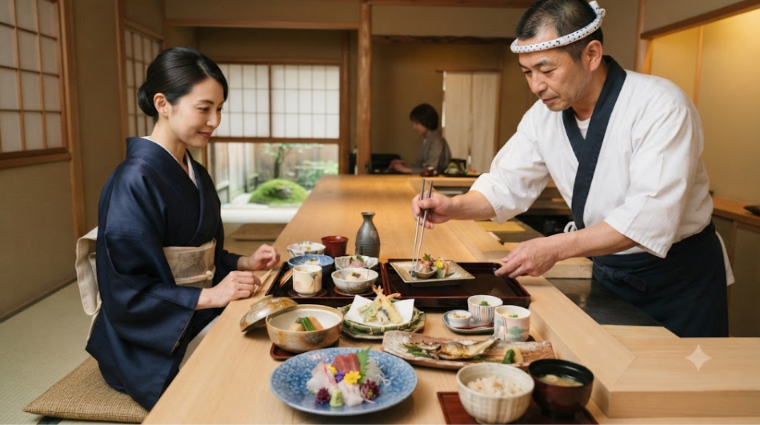
Kaiseki is a traditional multi-course Japanese meal built around seasonal ingredients, careful preparation and elegant presentation. Dishes arrive in a set order, in small portions, and the menu changes through the year.
This guide explains where kaiseki comes from, what the usual courses are, and what to know before you book as a visitor.
Table of Contents
- What Kaiseki Is
- Where Kaiseki Comes From
- Kyoto Style and Regional Kaiseki
- The Usual Courses
- Seasonality and Presentation
- Booking and Etiquette for Visitors
- How Much Kaiseki Costs
- Kaiseki at a Ryokan or a Restaurant
- Kaiseki vs Omakase
- Shojin Ryori: Buddhist Vegetarian Kaiseki
- How We Would Book Our First Kaiseki
- Frequently Asked Questions
- Sources and Last Check
What Kaiseki Is
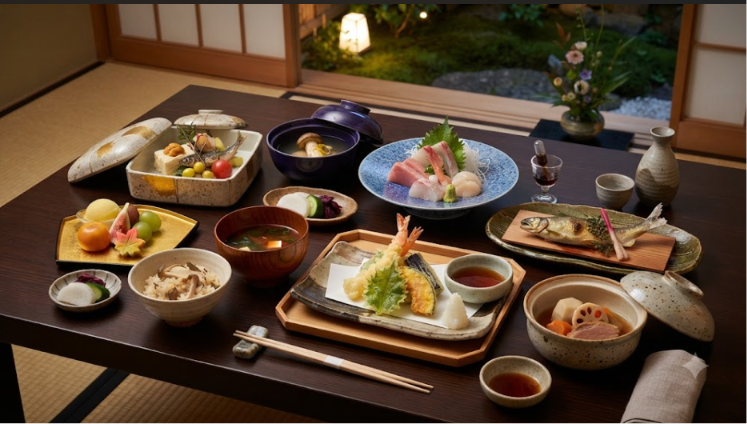
Kaiseki is often described as Japan’s haute cuisine. Rather than choosing dishes from a menu, you usually receive a set sequence chosen by the kitchen. Ingredients are seasonal and often local, and menus change monthly, according to byFood. The meal is as much about presentation, tableware and atmosphere as it is about taste.
Where Kaiseki Comes From
Kaiseki developed over several centuries from a simple meal into a multi-course banquet. It is believed to have grown out of ichiju-sansai, a meal of one soup and three side dishes, and out of the tea ceremony, where food was served to accompany the tea. This tea-ceremony style is called cha-kaiseki. Banquet-style meals of the imperial court and aristocracy are also part of its history.
The word is written with different characters in different contexts. One refers to the light meal served before tea, and another to a banquet-style dinner, which is why you may see it written two ways.
Kyoto Style and Regional Kaiseki
Kyoto is widely regarded as the birthplace of kaiseki. PickYourTrail traces cha-kaiseki, the modest meal before the tea ceremony, to Kyoto in the 16th century. Kyoto-style cooking, called Kyo-ryori, is known for local produce such as Kyo-yasai (Kyoto vegetables), tofu and fish, according to byFood and HaniSeoul.
Other regions put their own spin on it. HaniSeoul says Osaka’s kaiseki developed around the Shinmachi area and Hokkaido’s focuses on seafood. PickYourTrail adds that the range runs from Michelin-starred restaurants in Tokyo to family-run ryotei, the traditional high-end restaurants, in regional towns. Because the menu follows what is in season locally, the same restaurant can serve very different meals in April and November.
The Usual Courses
Menus vary by restaurant and season, but byFood lists a typical order like this:
| Course | What it is |
|---|---|
| Saizuke | A small appetiser, often served with sake |
| Nimono | A simmered dish of vegetables and meat or fish |
| Mukozuke | Sashimi |
| Hassun | A seasonal selection on a small tray |
| Yakimono | A grilled course, usually fish |
| Futamono | A lidded dish, often a soup |
| Shokuji / hanmono | Rice, served last with miso soup and pickles |
| Dessert | Often fruit or a sweet to finish |
A note on spelling: the opening course is written saizuke in the table above and sakizuke in many other guides. Names and order also vary a little between restaurants, and some kitchens add courses such as a deep-fried dish. If a course name is unfamiliar, the staff will usually explain it as it arrives.
Seasonality and Presentation
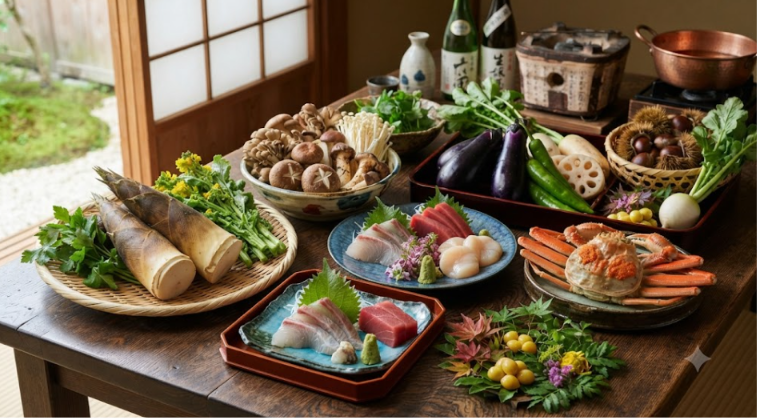
Seasonality is central. For example, byFood notes that an autumn hassun may feature chestnuts, sweet potatoes and maple leaves. Dishes are often arranged to evoke the season, and the choice of plates and bowls follows the same idea.
Booking and Etiquette for Visitors
- Book ahead. Many kaiseki restaurants are small, and some require reservations.
- Mention allergies and dietary needs when you book, since set menus are hard to change on the day.
- Arrive on time. Courses are prepared in sequence.
- Expect to be served in a set order and eat each course as it arrives.
- Check the price and what is included before you go. Prices vary widely.
- Confirm whether your ryokan includes dinner in the rate before you pay, since some ryokan-style hotels skip it
- Reserve directly or through the restaurant’s booking page, because byFood says reservations are usually required at Kyoto kaiseki restaurants
- Consider lunch if the dinner price is too high, since lunch menus can cost much less
Some Japanese inns (ryokan) serve kaiseki-style dinners as part of an overnight stay. Check with the property for details and prices.
How Much Kaiseki Costs
Kaiseki prices swing widely because the format covers everything from a temple-side lunch to a Michelin-starred dinner. These figures come from published 2026 guides and restaurant listings, so confirm the current price when you book:
| Setting | Typical price per person | Source note |
|---|---|---|
| Affordable kaiseki lunch | From about ¥5,000 | Japanese Taste |
| Mid-range dinner | About ¥10,000–¥25,000, with 7–10 courses | Japanese Taste puts mid-range dinners at ¥10,000–¥20,000, and PickYourTrail at ¥15,000–¥25,000 |
| Average Kyoto dinner | About ¥15,000 | byFood Kyoto listings |
| Top-end Kyoto dinner | ¥30,000–¥80,000 | byFood lists several restaurants in this band |
| Mid-range ryokan stay with kaiseki dinner | ¥25,000–¥50,000 | Nomado Travel. Price per person, usually including breakfast |
Check whether the price includes drinks, tax and service before you book, and whether children are welcome at your table.
Kaiseki at a Ryokan or a Restaurant
A ryokan, or traditional inn, is the easiest way to try kaiseki. Nomado Travel says Kyoto ryokan price per person rather than per room, and that kaiseki dinner and a Japanese breakfast are usually included, though some modern ryokan-style hotels skip dinner. HaniSeoul says ryokan dinners run from 7 to 14 courses, while Nomado Travel describes 8 to 12 courses over 90 minutes or more at a quality ryokan.
At a restaurant, PickYourTrail says a full kaiseki dinner typically lasts two to three hours. Neither format is flexible about timing, because courses are prepared to arrive at the right temperature and being late disrupts the whole sequence.
- Chopstick etiquette matters at a kaiseki meal, so do not pass food from chopsticks to chopsticks or stand them upright in rice
- Eat each course while it is at its intended temperature, as HaniSeoul advises
- Respond to staff greetings with a light nod, a small gesture that fits the formal setting
- Tell the staff about allergies or dietary needs when you book, not when the first course arrives
Kaiseki vs Omakase
Omakase means leaving the choice of dishes to the chef, and can apply to many cuisines, sushi included. Kaiseki is a specific multi-course style with its own seasonal structure. The two can overlap in spirit, since both rely on the kitchen’s judgment, but they are not the same thing. For sushi specifically, see our guide to the best places to eat sushi in Tokyo.
Shojin Ryori: Buddhist Vegetarian Kaiseki
If you avoid meat and fish, shojin ryori is the reliable option. PickYourTrail describes it as a distinct tradition that uses no animal products at all, and Japanese Taste notes that Kyoto’s monasteries have prepared it for hundreds of years, with tofu a staple.
Three examples from 2026 guides: Shigetsu inside the Tenryu-ji temple, a UNESCO World Heritage Zen temple, described by Jasumo as shojin ryori at its best; Izusen, which Japanese Taste lists as a budget-friendly option in a temple-side setting with branches in Arashiyama and Daitokuji; and Ajiro near Kyoto Station, which Jasumo describes as a modern take.
Etiquette is simple: finish everything you are served. Jasumo notes that wasting food is considered disrespectful in the shojin tradition.
How We Would Book Our First Kaiseki
If it were our first kaiseki, we would not start with the most expensive dinner. The simplest path is to match the format to what you want from the meal:
| If you want… | We would choose | Why |
|---|---|---|
| The experience on a budget | A kaiseki lunch | Japanese Taste says lunch can start around ¥5,000 |
| The whole evening, with a bath and a room | A ryokan dinner | Dinner is usually included in the rate, and you do not have to travel afterwards |
| A meat- and fish-free meal | Shojin ryori | It uses no animal products, and places such as Izusen are listed as budget-friendly |
| A special occasion | A Kyoto dinner at about ¥15,000 or more | byFood’s Kyoto listings average about that figure for dinner |
Whatever the format, we would tell the restaurant about allergies when booking, arrive on time and ask the price and what it includes first. For an evening of Kyoto culture to pair with dinner, see our guide to where to see geisha in Kyoto, and for cash at small restaurants, our money guide.
Frequently Asked Questions
What does kaiseki mean?
It refers to a traditional multi-course Japanese meal. The name is written with different characters for the tea-ceremony meal and the banquet-style dinner.
Is kaiseki expensive?
Prices vary widely by restaurant and setting. Check the menu or ask your accommodation before booking.
Can vegetarians eat kaiseki?
Some restaurants can adapt, but many courses use fish or dashi. Ask when you book.
How long does a kaiseki meal take?
Plan on a leisurely dinner, since courses are served one at a time. Confirm timing with the restaurant.
What is the first course?
A small appetiser called saizuke, often served with sake, according to byFood.
How much does kaiseki cost in Kyoto?
byFood’s Kyoto listings average about ¥15,000 per person for dinner. Japanese Taste says an affordable kaiseki lunch can start around ¥5,000, and a handful of top restaurants in the byFood listings charge ¥60,000–¥80,000 for dinner.
Is kaiseki the same as shojin ryori?
No. Shojin ryori is Buddhist temple cuisine that uses no animal products, while a typical kaiseki dinner includes fish and is often built on dashi stock. Some restaurants serve shojin ryori in a multi-course format, which is why it is sometimes called Buddhist vegetarian kaiseki.
What time is kaiseki dinner served at a ryokan?
HaniSeoul says it is generally served between 6 p.m. and 8 p.m. Confirm your time at check-in and arrive on schedule, because courses are prepared in sequence.
What do you drink with kaiseki?
Sake is the most common drink, according to HaniSeoul. If you do not drink alcohol, tell the staff when you book so they can suggest tea or another drink.
Sources and Last Check
Facts on this page were checked against the sources below on October 9, 2026. Prices, opening hours and rules can change, so confirm with the operator before you go. Images on this page are illustrative and are not photos from a specific visit.
- byFood: Kaiseki ryori, Japan’s traditional multi-course meal
- PickYourTrail: Kaiseki dining in Japan
- byFood: Kyoto kaiseki restaurants
- HaniSeoul: Kaiseki dinner etiquette at a ryokan
- Nomado Travel: Staying in a Kyoto ryokan
- Japanese Taste: Kyoto food guide
- Jasumo: Kyoto’s vegetarian dining and shojin ryori
