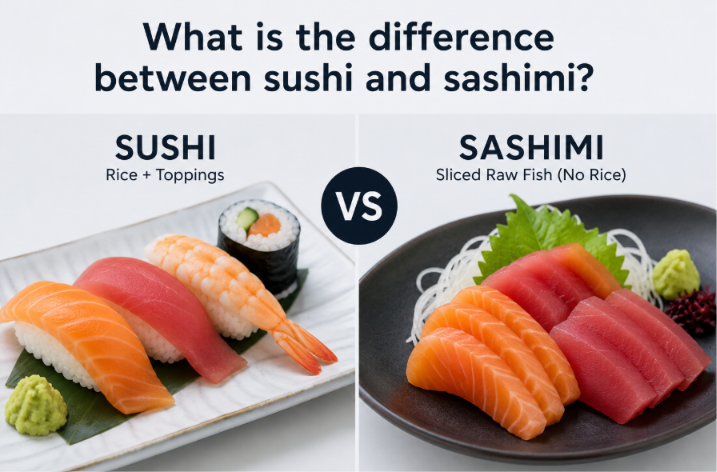
People all over the world love Japanese food. Two of the most popular Japanese dishes are sushi and sashimi. Many people enjoy both dishes. But they are actually different. Knowing the difference between sushi and sashimi will actually help you to order the right dish and enjoy Japanese food happily.
Many people think they are the same dish because Japanese restaurants serve them together on the same plate. Sashimi is made of thin slices of fresh raw fish or seafood served without rice. Because of this, the taste of each dish is different due to the different ingredients used.
From this, you will understand the difference between sushi and sashimi in a simple way. This guide explains the ingredients, how chefs prepare each dish, their health benefits, their history and how to choose the one you will enjoy the most.
Table of Contents
What Is Sushi?
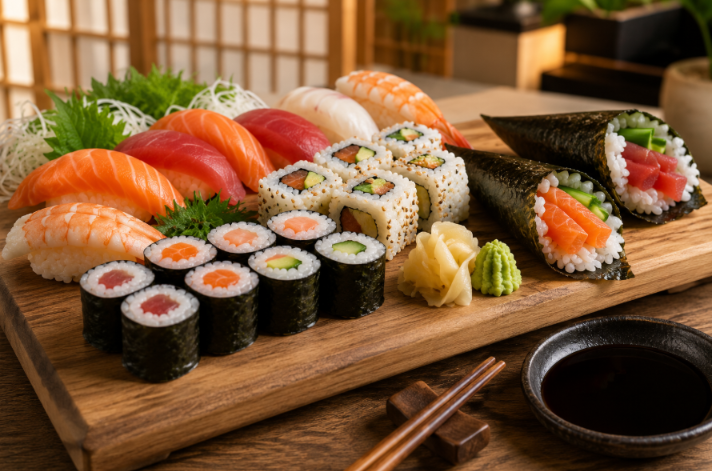
Sushi is a traditional Japanese dish that uses special sushi rice. Chefs make the rice with vinegar, sugar and salt. It tastes slightly sweet and tangy.
Sushi can be filled with many different ingredients. Some popular and tasty items include raw fish, cooked seafood, vegetables, egg, avocado, cucumber and nori. There are different types of sushi that are made with different ingredients, so every sushi has a unique taste.
Many people think sushi always has raw fish, but that is not true. So not all sushi is the same. Some types of sushi use cooked seafood and some do not contain any seafood at all.
The most important part of sushi is the specially prepared rice, not the fish.
Read more: What is the Best Place to Eat Sushi in Tokyo? Complete Guide
What Is Sashimi?
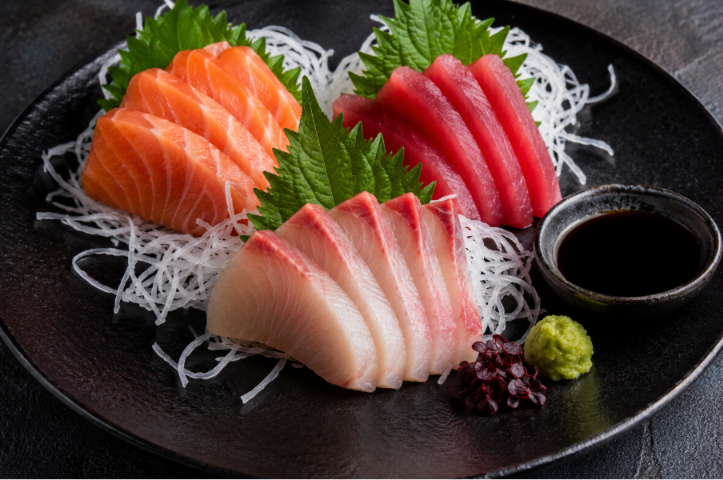
Sashimi is simpler to prepare than sushi. Chefs make sashimi with thin slices of raw fish or seafood and serve it without rice.
The fish used to make sashimi must be very fresh. Professional and skilled chefs prepare sashimi carefully, so the seafood is safe to eat.
Some popular types of sashimi include tuna, salmon, yellowtail, mackerel, octopus, squid and scallops. Each type of sashimi has its own taste and texture, so you can enjoy the types that suit your taste. Restaurants usually serve sashimi with soy sauce, wasabi, shredded daikon radish and sometimes fresh ginger.
They serve sashimi without rice or other ingredients, so you can enjoy the natural taste of the fish or seafood. It is a good dish if you love to eat seafood.
Understanding the Difference Between Sushi and Sashimi
The answer to the question of what is the difference between sushi and sashimi can be found by comparing every small item and the ingredients used to make them.
Sushi is prepared with specially made rice, while sashimi is sliced raw seafood served without rice. The main differences are:
| Feature | Sushi | Sashimi |
| Main Ingredient | Vinegared rice | Raw sliced fish or seafood |
| Rice | Always included | Never included |
| Seafood | Raw or cooked | Usually raw |
| Seaweed | Sometimes used | Not used |
| Preparation | Rice with toppings or fillings | Thin slices of seafood |
| Flavour | Balanced and varied | Pure seafood flavor |
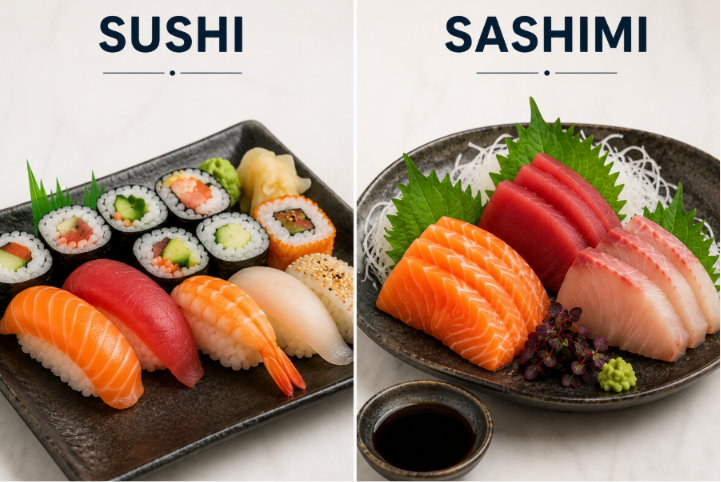
From this simple comparison, you can understand the difference between sushi and sashimi when ordering at a restaurant.
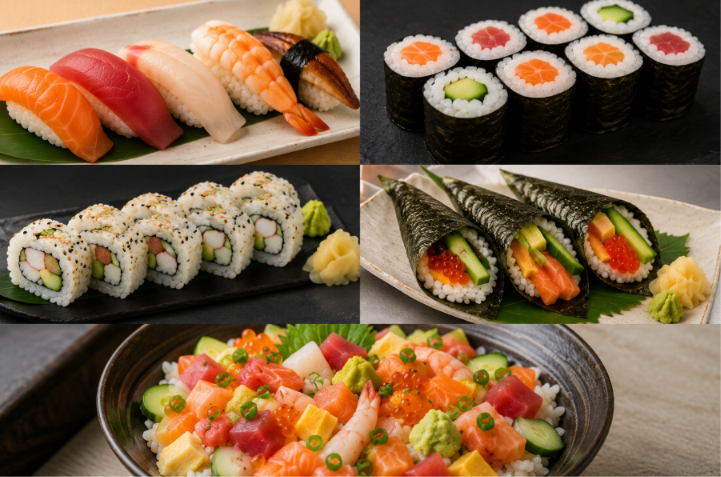
Different Types of Sushi
There are many types of sushi, and each one is a little different. Some are rolled, some are served in a bowl and others are made by hand. Some of the most popular types of sushi are:
Nigiri
It is one of the most traditional types of sushi. Chefs make nigiri with a small piece of sushi rice and place a slice of fish or seafood on top. Nigiri has a simple taste, but it lets you enjoy the fresh taste of the fish.
Maki
Chefs roll maki with sushi rice and fillings, then cut it into small pieces. Chefs make maki with sushi rice, nori and different fillings. Some commonly used items are tuna, cucumber, avocado, crab and salmon. Maki is one of the most popular types of sushi, and it is good for beginners to try.
Uramaki
Unlike regular sushi rolls, uramaki has rice on the outside, while nori wraps the filling inside. California rolls are one of the best examples of uramaki. Chefs add sesame seeds or fish eggs on the outside for extra flavor.
Temaki
Chefs make temaki into a cone-shaped sushi roll with sushi rice, vegetables and seafood. People usually eat temaki with their hands because it is larger than most other types of sushi.
Chirashi
Chefs serve chirashi in a bowl of sushi rice and add fresh seafood and vegetables on top. It includes many different toppings, so you can enjoy different flavors in one dish. It is the best choice if you want to try different kinds of seafood and vegetables in a single dish.
Popular Types of Sashimi
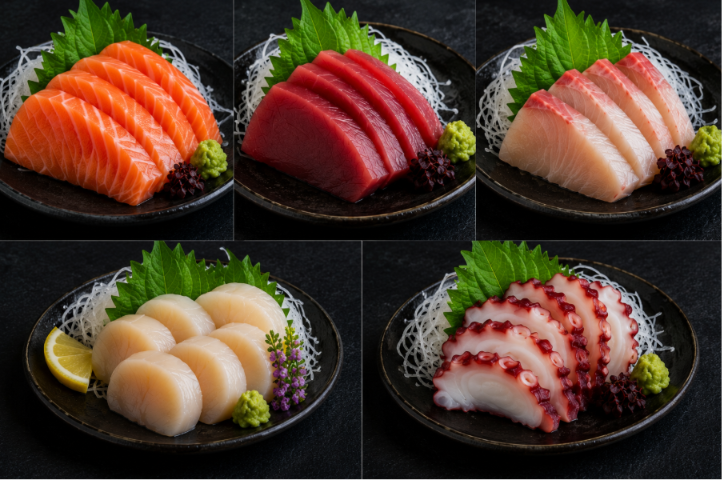
Sashimi is made with fresh fish or seafood and is served without rice. As there are no extra ingredients, you can enjoy the natural taste, texture and freshness of the fish. The quality of the fish is very important. There are many types of sashimi, and each one has its own flavor. Here are some of the most popular types of sashimi:
Salmon Sashimi
It is soft, rich and full of flavor. Its smooth texture makes it one of the most popular items for people who are trying sashimi for the first time.
Tuna Sashimi
Tuna sashimi is soft, fresh, and has a light taste. It is one of the most common types of sashimi served in Japanese restaurants, and it is loved by many people.
Yellowtail
This sashimi has a delicate texture and a mild, slightly sweet taste. It is a great choice if you enjoy fish with a smooth and light flavor.
Scallops
This sashimi is naturally sweet, soft and very smooth. It has a smooth texture that melts in your mouth, which makes it a favorite for many seafood lovers.
Octopus
Octopus sashimi is usually lightly cooked before it is sliced and served. It has a slightly chewy texture, and many people enjoy it with soy sauce or wasabi for extra flavor.
Which One Should You Choose?
You may have understood the difference between sushi and sashimi. Even though they look similar, chefs prepare them in different ways, so each dish has its own taste.
Chefs make sushi with sushi rice and add raw fish, cooked seafood, vegetables, egg, avocado, cucumber or nori. Chefs prepare sashimi with thin slices of fresh fish or seafood and serve it without rice. This helps you enjoy the natural taste of the fish.
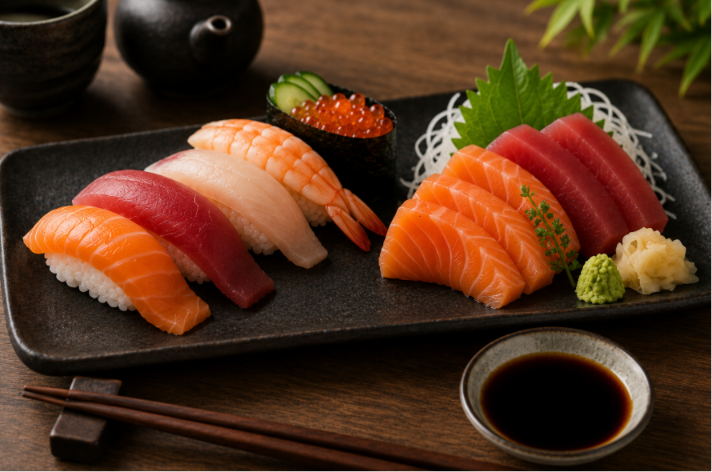
Both sushi and sashimi are delicious, and both are a great way to enjoy Japanese food, but if you like rice and different toppings, then sushi is a good choice. However, if you want to enjoy the natural taste of fish or seafood, then sashimi is the better option. If you are still not sure, you can also try both dishes. This way, you can compare their taste and texture for yourself. The next time you visit a Japanese restaurant, you will know the difference between sushi and sashimi and can order with confidence.
